

 -0.02 (-0.1%)
 Tornar
 Indoor pools offer outstanding benefits including year-round usability and design versatility, extending the value and uses of a wide range of facilities, whether as part of a hotel, wellness centre, sports club or real estate development. However, indoor pools also present their own unique challenges when it comes to achieving sustainability and efficiency in design and operation. A series of challenges that the right design and technical decisions can overcome.
The term “indoor pool” covers a wide range of facility types, ranging from lap pools in fitness centres to plunge pools in resorts and wellness spas. This versatility in forms also responds to the different purposes that these pools can fulfill: in hospitality and wellness sectors, they offer all-weather leisure and relaxation; in real estate, they add value and a sense of luxury; meanwhile, in sport clubs, they stand out for providing a controlled environment for training.
Recognizing these varied uses is the first step in designing an efficient, sustainable indoor pool. A first fundamental step that then must be accompanied by the right choices surrounding design and operational best practices, considering indoor pools’ particularities.
In this article, we analyze the unique needs and challenges of indoor pools, followed by the key technical and design solutions to ensure top efficiency and sustainability in such facilities.
Submergeix-te més amb l’eBook


 Contacte
 Tancar
What particular needs do indoor pools present?
- Moisture control: mold, corrosion and damage to building fabric can emerge without adequate dehumidification and structural protection.
- Appropriate lighting: both natural and artificial lightning sources must be considered for indoor pools, since these installations lack full exposure to outdoor light. Design choices should optimize daylight via skylights or windows while also avoiding glare and integrating efficient LED for underwater lighting.
- Construction needs: proper construction systems and materials must be installed to effectively operate under the high humidity environment of indoor pools. While traditional concrete basins remain viable, modular panel systems offer quicker construction, dimensional accuracy and fewer onsite disruptions, and can be especially beneficial in retrofit projects or mixed-use buildings.
What are key design and operational tips for building efficient and sustainable indoor pools?
Opting for the right construction system
Efficient indoor pool design begins by selecting the right pool type, size, and construction system.
Today, construction based on modular panel systems are gaining traction because of their capacity to accelerate on-site build time, ensure precision and reduce disruption during construction.
Among the top choices are systems made from prefabricated steel or galvanized-panel installations, including Fluidra’s Skypool modular system.
Effectively managing heat and humidity
When it comes to operational best practices, indoor pools demand robust HVAC, dehumidification and humidity-control systems.
These must be integrated to minimize the damage that trapped moisture in indoor pools may cause, including potentialstructural and corrosion risks.
Apart from this, a series of design choices in indoor pools can support efficient dehumidification, including:
- Good thermal insulation across the building.
- Correct slope of decking. In certain indoor pool layouts, this may include sloping the deck slightly toward the pool basin.
- Avoiding dead-air zones behind ceilings or drop ceilings.

What water, energy and chemical processes are fundamental for sustainability in indoor pools?
Among the top commercial pool management tips today are those aligned with achieving sustainability. In indoor pools, this becomes even more critical, considering they operate all year round
In this context, here are some of the key best practices for ensuring sustainability in indoor pools:
- Use high-efficiency equipment. This includes energy-efficient pumps, variable-speed drives, advanced heat-recovery systems and automatic pool covers to reduce heating and evaporation losses.
- Optimize water treatment for indoor conditions. Water treatment systems for indoor pools must provide stable water chemistry and efficient filtration, while also minimizing chemical carry-over processes into the air. As such, water treatment processes that are well adjusted to indoor pools ensure fewer chemical by-products, less corrosion on accessories and better indoor air quality.
- Choose finishes and materials that resist humidity and chlorinated atmospheres. For indoor pools, certain materials such as stainless-steel fittings or modular panels with protective coating play a big role in extending the facility’s longevity and lowering maintenance needs.
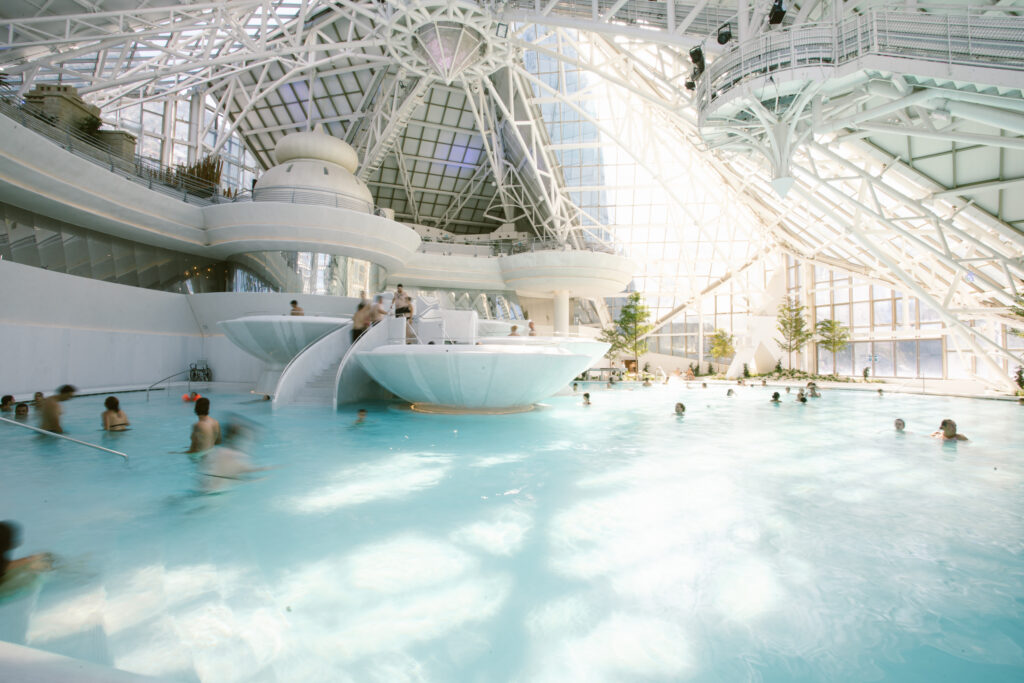
How can operators ensure efficiency and sustainability in indoor pools?
As a summary, any facility planning to add indoor pools to their offer should consider the following aspects:
- Recognizing the specific user type to build an indoor pool that matches their needs and expectations.
- Picking the right construction system, considering the advantages of modular panels vs conventional concrete pools.
- Integrating energy-efficient solutions and chemical treatment systems to ensure pristine water and clean air with the highest efficiency.
- Meet the unique environmental demands of indoor spaces, prioritizing humidity management systems and design choices.
High-performing and sustainable indoor pools emerge when these aspects are considered both individually and from an integrated perspective. This results in an indoor pool becoming a long-lasting asset that provides differentiation without increasing operational burdens or the facility’s environmental impact.
As global leaders in the swimming pool construction industry, Fluidra stands out as a key partner for operators looking to build efficient and sustainable indoor pools.
Frequently asked questions about indoor pools
How to design a swimming pool?
While designing an indoor swimming pool involves a complex set of decisions, the top choices revolve around the following key topics:
- Addressing space potentials and limitations.
- Employing modern construction options such as modular systems while taking structural support needs into account.
- Ensuring the right choice of materials, which must be resistant to corrosion, moisture and chemical exposure.
- Adding suitable water treatment and air ventilation systems.
- Considering sustainability and energy efficiency options, including modern heat recovery systems.
- Adding appropriate safety elements, including slip-resistant surfaces or guardrails/handrails, among other elements.
- Adequate lighting features, considering both natural and artificial sources.
Is an indoor swimming pool a good idea?
When well designed, an indoor swimming pool represents a long-lasting asset that raises the value of any environment or project, from hotels to sports clubs, wellness centers or real estate developments.
What are the downsides of indoor pools?
Correctair qualityandhumidity managementare two of the main challenges that need to be addressed when building indoor pools. To overcome these challenges, pool design must incorporateadequate water treatment systems, robust HVAC and humidity-control systems.
Meanwhile, in order to guarantee efficient and sustainable operation, high-efficiency equipment should be incorporated, including energy-efficient pumps, variable-speed drives, advanced heat-recovery systems and automatic pool covers.