

 0.04 (+0.23%)
 Tornar
  Contacte
 Tancar
Walking through a series of water stations that alternate between cold and hot may seem like a simple experience, but behind it lies a hydrotherapy method with over a century of history. The Kneipp circuit uses precisely these temperature changes, movement, and the contact of water with specific areas of the body to provide an experience of revitalization and well-being.
Kneipp hydrotherapy owes its name to Sebastian Kneipp, who, during the 19th century, developed an approach based on different applications of water within a broader philosophy related to well-being and healthy habits.
Today, the Kneipp method is practiced through leg and foot circuits, foot baths, or showers at different temperatures. It can be part of a more comprehensive hydrotherapy experience alongside other features such as a hydrotherapy pool, water showers, or relaxation areas.
But what exactly happens during the circuit? By alternating thermal stimuli, the body responds to changes in temperature. Hot water produces a feeling of relaxation and promotes the dilation of superficial blood vessels, while cold water triggers a constriction response. This alternation is the basis for many of the sensations associated with the Kneipp method.
Health and Wellness Benefits of the Kneipp Circuit
One of the main attractions of the Kneipp circuit is that it combines water, movement, and temperature changes into a single experience.
The alternation between cold and heat can help stimulate peripheral circulation and create a feeling of invigoration, especially in the feet and legs. Added to this is the sensory effect of the circuit itself, which can be relaxing or revitalizing depending on the sequence and the temperatures used.
Among the effects commonly associated with this type of hydrotherapy are:
- Stimulation of peripheral circulation.
- A feeling of lightness in the legs.
- Relaxation after physical activity.
- Sensory stimulation through different temperatures and surfaces.
- A general sense of vitality and well-being.
Its mechanism is closely related to contrast baths, as both involve alternating between cold and hot water. The main difference is that the Kneipp method is typically applied to the lower extremities and may involve moving through different courses.
Key Elements of a Kneipp Circuit
Although there are different ways to practice Kneipp hydrotherapy, most circuits share the same principle: progressively applying water stimuli at different temperatures.
Hot-and-Cold Foot Baths
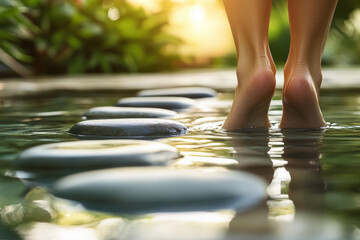
The foot bath is probably the most characteristic element of a Kneipp circuit. It involves walking through one or more channels or small basins of water in which different temperatures alternate.
Normally, the water covers the feet and part of the legs. The person moves slowly along the path, passing successively through areas of warm or hot water and others of cold water.
The floor can also enhance the experience. Some paths incorporate surfaces with different textures or rounded stones to provide additional stimulation to the soles of the feet while walking.
It is precisely this combination of temperature, movement, and contact with different surfaces that makes the Kneipp foot bath more than just a simple foot soak.
Paths and Jet Showers
Kneipp hydrotherapy need not be limited to foot baths. It can also include water jets or showers directed at different areas of the body, especially the feet, legs, and arms.
These jets can be used at different temperatures and applied in a specific order. In this way, the water becomes a localized stimulus that complements the effect of the contrast paths.
As part of a broader aquatic experience, these elements can be combined with showers, pools, rest areas, or other water-based treatments. The key is to maintain a consistent sequence and avoid temperature changes that are too sudden or prolonged.
How to Incorporate the Kneipp Circuit into a Hydrotherapy Routine
A Kneipp circuit can be integrated as a stage within a broader hydrotherapy experience. There is no single “correct” sequence, as the duration, temperatures, and method of application may vary depending on the circuit and the characteristics of each facility.
Typically, the circuits are structured around relatively brief periods of exposure to different temperatures. During foot baths, for example, participants move slowly through the water while slightly lifting their feet with each step—a movement traditionally associated with this type of practice.
Thermal alternation is the key element. Warm or hot areas provide a sense of relaxation, while subsequent contact with cold water generates a more intense and revitalizing stimulus.
It is also important to pay attention to your body’s own sensations. Hydrotherapy should not cause pain or heat or cold that is difficult to tolerate. People with certain cardiovascular diseases, circulatory problems, or other medical conditions should consult a healthcare professional before undergoing treatments based on thermal contrasts.
Ultimately, the Kneipp circuit demonstrates how simple elements such as water, temperature, and movement can be combined to create a unique hydrotherapy experience. When integrated with other aquatic treatments, it can help enrich routines focused on rest, recovery, and well-being. Fluidra develops hydrotherapy and aquatic wellness solutions designed to create water experiences tailored to different needs and ways of enjoying wellness.