

 -0.18 (-0.88%)
 Go back
 A chemical free pool is a swimming facility that operates with no added chemical disinfectants—no chlorine, no bromine, no synthetic sanitizers. While most innovative systems reduce chemicals significantly, biological filtration in natural pools is the one approach that eliminates its usage entirely.
If you’ve ever stepped out of a pool with red eyes or tight skin, you already know why so many facility managers are searching for something better. The idea of a chemical free pool sounds almost too good to be true—and with most systems, it partially is. But the full picture is more nuanced, and more hopeful, than most articles let on.
In this guide, we compare every system that gets you closest to that goal and clarify one misconception in the industry: saltwater pools use low-chemical systems, but they aren’t entirely chemical free.
Dive deeper with the eBook


 Contact us
 Close form
What does “chemical free pool” actually mean?
A chemical free pool is one that operates without adding any chemical disinfectants to the water. In practice, this means no chlorine, no bromine, and no synthetic sanitizers of any kind. The water stays clean through physical, biological or electrochemical processes instead.
The term is often misused. Manufacturers of UV systems, ozone generators and copper ionizers all market their products as “chemical free”—but most of these systems still require a minimal residual sanitizer in the water as a backup. The only exception is biological filtration, used in natural swimming pools, where beneficial microorganisms handle all water purification without chemical support.
That said, for most swimmers, the real goal isn’t zero chemicals—it’s zero irritation. And several systems get very close to that, even if a tiny chlorine residual remains. Understanding this distinction is the first step to choosing the right solution.
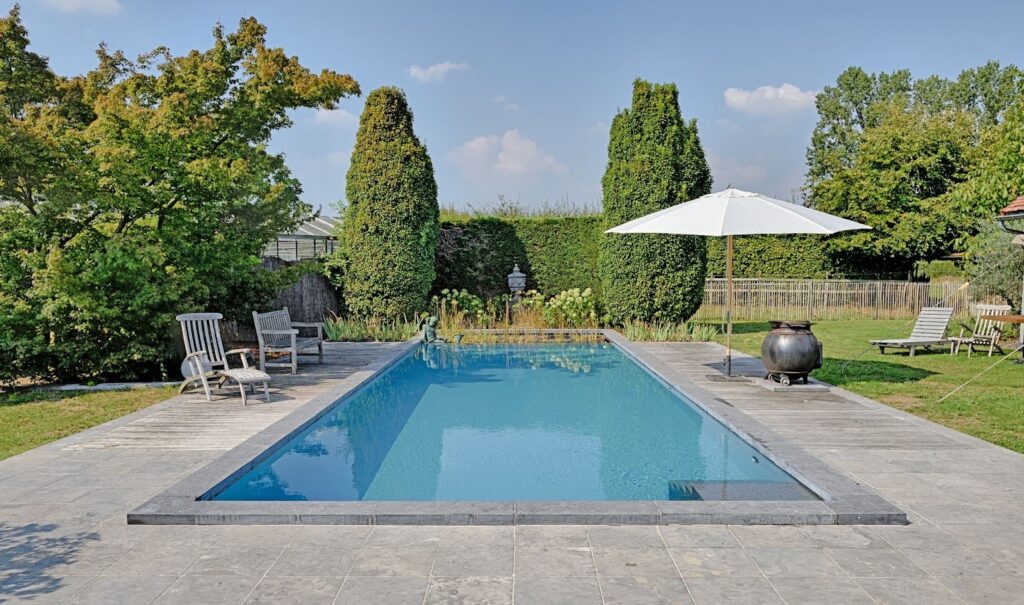
Why do pool owners want to eliminate pool chemicals?
The short answer is comfort and health. The longer answer involves chloramines—disinfection byproducts that form when chlorine reacts with organic matter in the water: sweat, body oils, sunscreen.
Chloramines may cause burning eyes, skin irritation, hair damage, and the characteristic “chlorine smell” most people associate with pools. Ironically, that smell isn’t free chlorine—it’s combined chlorine that has already reacted and lost its disinfecting power. The World Health Organization recognizes chloramines as a respiratory irritant, particularly in indoor pools where ventilation can’t disperse them.
What are chloramines and why do they cause problems?
Chloramines form when free chlorine reacts with nitrogen-containing compounds from swimmers’ bodies. They are significantly weaker disinfectants than free chlorine, yet far more irritating. A pool with high chloramine levels—measured as combined chlorine, or the gap between total and free chlorine—will smell strongly of “chlorine” while actually being under-disinfected. The solution is not more chlorine; it’s oxidation to destroy the chloramines. UV and AOP systems do this exceptionally well.
Is a 100% chemical free pool actually possible?
Yes—but only with one technology. Biological filtration, as used in natural swimming pools, is the only system that eliminates chemical disinfectants entirely. It works through the combination of mechanical filtration, water recirculation, and beneficial microorganisms —such as aquatic plants— which consume the organic matter and pathogens that would otherwise require chemical treatment.
It should be noted that natural pools offer a swimming experience closer to nature, similar to swimming in a natural lake. On the other hand, as no chemicals are used, control over water quality is not as precise and requires more attention to keep it clear and free from algae.
For all other technologies—UV, ozone, AOP, low-salinity electrolysis—a minimal residual sanitizer is still recommended or required by health authorities. According to the WHO, a residual of just 0.5 ppm of free chlorine, combined with UV disinfection, is sufficient for safe swimming—and at that concentration, chlorine is essentially undetectable by sight, smell or feel.
So the realistic spectrum looks like this: conventional pools sit at 1–3 ppm chlorine; UV and AOP systems bring this down to 0.5 ppm or less; biological filtration brings it to zero.
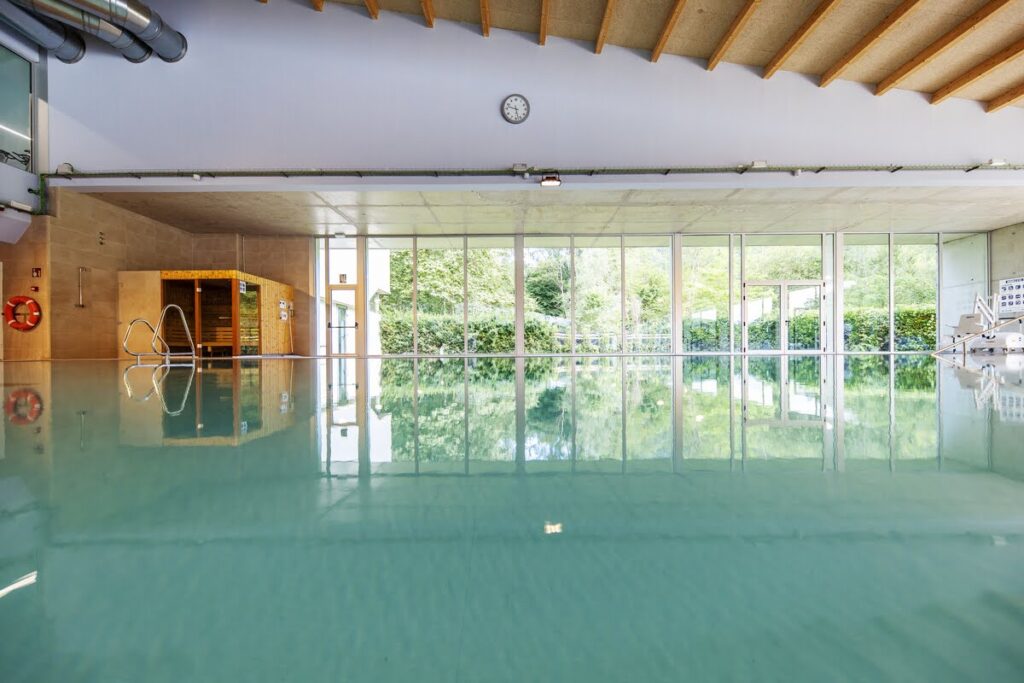
What are the best systems to achieve a chemical free pool?
Here is an honest, technology-by-technology overview—from the systems that significantly reduce chemicals to the one that eliminates them entirely.
UV disinfection
A UV disinfection system exposes pool water to ultraviolet light as it passes through the filtration circuit. The radiation inactivates bacteria, viruses and protozoa in milliseconds, and—critically—destroys chloramines on contact. This is its most commercially relevant benefit: indoor pools using UV systems report dramatically fewer guest complaints about eye and skin irritation.
UV systems do not eliminate the need for a chlorine system, as they do not provide the water with disinfecting power. But they are the perfect complement to reduce it to the 0.5 ppm level recommended by the WHO—far below the 1–3 ppm typical in conventional pools. They are the most widely adopted low-chemical solution in commercial aquatics and are considered best practice for indoor facilities.
Ozone and AOP (Advanced Oxidation Process)
Ozone is a powerful oxidizer that destroys organic contaminants, bacteria and chloramines more effectively than chlorine alone. When combined with UV in an Advanced Oxidation Process (AOP), it can reduce chemical demand by up to 90%. AOP is increasingly specified in luxury hotel pools, water parks, and high-end wellness centers in Europe and North America.
Like UV, AOP still requires a minimal chlorination sanitizer—but the water quality and comfort improvements are significant. Chloramine levels drop close to zero, water clarity improves, and the swimming experience becomes noticeably softer and cleaner.
Low-salinity electrolysis (Neolysis)
Neolysis, or low-salinity electrolysis, generates disinfection on-site from very low concentrations of salt—without the need to handle, store or dose chemical chlorine. The result is a more stable, consistent residual, fewer disinfection byproducts, and water that guests consistently describe as feeling softer and more natural.
For hotels, resorts and spa facilities, saline chlorination represents a compelling middle ground: it eliminates chemical handling and dramatically reduces chloramines while remaining fully compliant with health regulations. It is also highly automatable, reducing maintenance demands on staff.
Natural swimming pools and biological filtration
Natural swimming pools using biological filtration are the only genuinely chemical free option. Water is purified entirely by beneficial microorganisms—and in plant-based systems, by aquatic plants as well—without any chemical input. The pool operates as a closed-loop ecosystem: a swimming zone where people swim, and a regeneration zone where biological cleaning happens continuously. For enhanced control of water clarity, the incorporation of recirculation pumps and a mechanical filtration system is key.
Water quality in well-designed and maintained natural pools meets the standards of conventional pools. They are used successfully in hotels, private pools and wellness centers across Europe, where guest satisfaction scores consistently highlight the softness of the water and the absence of any chemical smell. The trade-off is a greater attention to its maintenance and a more complex design process—but for facilities where sustainable positioning is central, no other system delivers the same impact.
How do these systems compare?
Here is a side-by-side comparison of the main low-chemical and chemical free pool systems:
System | Chemical reduction | Chlorination needed? | Chloramine control | Best for |
UV disinfection | High (70–90%) | Yes (0.5 ppm) | Excellent | Commercial, indoor pools |
Ozone / AOP | Very high (up to 90%) | Yes (minimal) | Excellent | Residential pools and small-medium sized commercial pools |
Saline chlorination (electrolysis) | High | Yes (included) | Very good | Hotels, resorts, spas, sport clubs |
Biological filtration | 100% | No | No need | Natural pools, eco-facilities |
Are saltwater pools chemical free?
No. This is one of the most persistent misconceptions in the industry. A saltwater pool works by passing salt-enriched water through a chlorine generator (electrolytic cell), which converts the salt into chlorine. The pool still contains chlorine—it’s simply produced on-site rather than added from a container.
The practical advantages are real: the water feels softer, chloramine spikes are less frequent, and there’s no need to handle liquid or granular chlorine. But the chemistry is the same. A saltwater pool is a lower-chlorine pool with simpler chemical management—not a chemical free pool.
For facility managers comparing options, saltwater systems are a meaningful upgrade from conventional chlorination, but they don’t reach the comfort or sustainability levels of UV, AOP, Neolysis, or biological filtration.
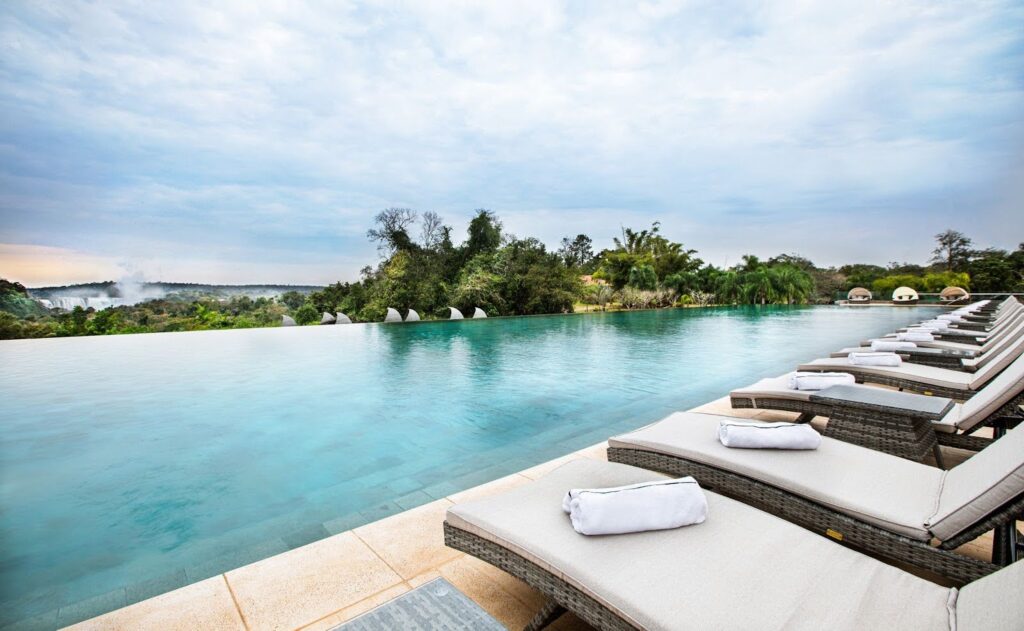
What does a chemical free pool mean for hotels and commercial facilities?
For hotel and spa operators, the move toward chemical free or low-chemical pools isn’t just about water quality—it’s a business decision with measurable returns.
A growing segment of wellness travelers specifically seeks out facilities with low-chemical aquatic experiences. The ability to market a pool as “no chlorine smell” or “naturally purified” translates into differentiation and premium positioning.
From an operational standpoint, chemical costs for commercial pools typically run €3,000–€8,000 per year. UV or AOP retrofits pay back within 3–5 years through chemical savings alone. Biological filtration eliminates chemical expenditure entirely while also reducing water consumption significantly—a growing priority for facilities pursuing sustainability credentials. Staff also benefit: no chemical storage, no handling risks, and simpler compliance.
How do you convert an existing pool to a low-chemical system?
Converting an existing pool is more feasible than many operators expect.
For a UV or AOP retrofit, most existing pools are compatible with minimal structural changes—the system installs in-line in the filtration circuit. Costs range from €3,000–€8,000 for residential to €15,000–€40,000 for commercial facilities.
For saline chlorination, the conversion is similarly contained, with costs typically running €8,000–€20,000 for commercial installations.
For biological filtration, a regeneration zone or biofilm filter must be added and plumbing adapted. Costs range from €30,000–€80,000, but ongoing chemical costs drop to near zero and the pool becomes a genuine wellness amenity rather than a standard facility.
In all cases, the first step is a professional assessment of your existing infrastructure and usage patterns. From there, the right system—and investment level—becomes much clearer.
Frequently asked questions
Can a pool be completely chemical free?
Yes, but only with biological filtration. Natural swimming pools that use microorganisms and aquatic plants for water purification operate without any added chemical disinfectants and are the only genuinely chemical free system available. All other technologies—UV, ozone, AOP, Neolysis—reduce chemical demand significantly but still require a minimal residual sanitizer for safety compliance.
Are saltwater pools chemical free?
No. Saltwater pools convert salt into chlorine through electrolysis—the pool still contains chlorine, just generated on-site rather than added manually. The water is softer and chloramine levels are lower, making saltwater pools more comfortable than conventional pools, but they are not chemical free.
What is the healthiest pool system?
For complete chemical elimination, biological filtration in natural swimming pools is the healthiest option—no disinfection byproducts, no chloramines, no residual chemicals. For existing commercial pools, combining UV or AOP with Neolysis delivers excellent water quality and bather comfort while remaining fully compliant with health regulations.
What can I use instead of chlorine in a pool?
The main alternatives are UV disinfection, ozone, AOP (Advanced Oxidation Process), low-salinity electrolysis (Neolysis), copper ionization, and biological filtration. Each reduces or eliminates the need for added chlorine to varying degrees. Biological filtration is the only system that removes the need for chemical disinfection entirely.
Are UV pool systems chemical free?
Not entirely. UV disinfection systems destroy bacteria, viruses and chloramines extremely effectively, but they do not provide a lasting sanitizing residual in the water. For safety, a low chlorine residual—around 0.5 ppm per WHO guidelines—is still recommended alongside UV. That said, at 0.5 ppm, chlorine is undetectable by sight, smell or feel, making UV-treated pools effectively chemical free in terms of swimmer experience.
All cost estimates provided in this article are indicative and may vary depending on the project and pool installation in question.