

 0.04 (+0.23%)
 Go back
 The infrared sauna is quickly becoming a wellness center favorite thanks to the specific benefits it entails. Taking the right choices in terms of design will make a difference in any installation.
As competition among wellness centers and other leisure options grows, operators look for new ways to improve their facilities and offer unique experiences to their users. The infrared sauna represents an outstanding option to surprise and improve clients’ experiences, building up from the traditional wellness sauna practice.
Learn what an infrared sauna is and how to make sure your facilities can access the right type.


 Contact us
 Close form
Infrared saunas have gained popularity in recent years due to their health and wellness benefits. These devices offer a unique way to enjoy the benefits of a traditional sauna, but with a different type of heat. Instead of heating the air around the body, as in conventional saunas, infrared saunas use infrared rays to heat the body directly. This approach provides a number of advantages that make them ideal for those seeking a personalized wellness experience.
The concept of wellness, or holistic well-being, has grown significantly, and many people are seeking spaces that promote relaxation and the care of physical and mental health. Including an infrared sauna in a wellness space not only enhances the user experience but also contributes to creating a healthy and rejuvenating environment.
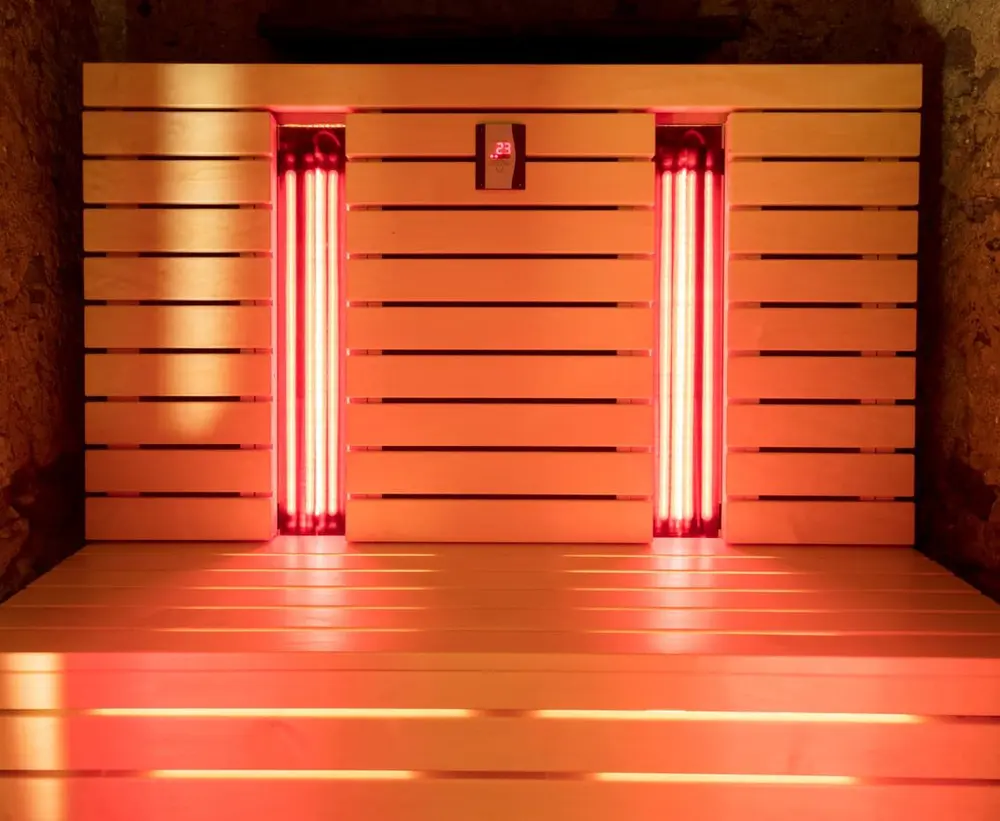
Infrared Saunas: Benefits for Wellness Centers
Infrared saunas have proven to be an excellent option for wellness centers, gyms, and spas, as they offer various health benefits. Among them are:
- Improved blood circulation: The heat emitted by infrared lamps penetrates deeply into the tissues, helping to improve circulation and oxygenation in the body.
- Detoxification: Infrared saunas induce deep sweating, which helps eliminate toxins from the body. This process is more efficient compared to traditional saunas.
- Muscle relaxation: The heat helps relieve muscle tension and pain, resulting in a sense of well-being.
- Stress reduction: The warm, relaxing environment promotes the release of endorphins, which helps lower stress and anxiety levels.
These benefits make infrared saunas an excellent option for wellness centers, where users’ physical and emotional health is a priority.
Infrared vs. Steam Sauna: Key Differences
There are several types of saunas, and each has distinct characteristics that influence the user experience. The two most common options are infrared saunas and steam saunas. Below are the main differences:
| Feature | Infrared Sauna | Finnish Sauna | Steam Sauna |
|---|---|---|---|
| Type of Heat | Direct dry heat via infrared radiation | Dry heat from hot stones | Humid heat generated by boiling water vapor |
| Temperature | 40-60°C (lower than traditional saunas) | 70-100°C (high temperature) | 40-50°C (medium temperature with high humidity) |
| Humidity | Low, almost none | Very low, due to dry heat | High, due to water vapor |
| Thermal Sensation | Intense heat that penetrates directly into the body | Intense, dry heat in the air | Humid heat that feels heavier and denser |
| Recommended Usage Time | 20-30 minutes | 15-20 minutes | 15-20 minutes |
| Energy Consumption | Low, more energy-efficient | High, due to the need to heat the entire space | High, due to the use of steam and hot water |
| Installation | Easy, no plumbing system required | Requires a heating system with stones and ventilation | Requires plumbing system and steam generator |
| Maintenance | Low, no special care required | Moderate, requires maintenance of stones and heating system | High, requires cleaning of the steam system and plumbing |
| Main Benefits | Detoxification, improved circulation, muscle relaxation | Deep relaxation, stress relief, intense heat | Skin hydration, pore opening, relaxation |
| Suitable for Small Spaces | Yes, ideal for limited spaces | No, requires a large space for air circulation | No, requires adequate space for steam |
| Installation Cost | Relatively low | Moderate to high, depending on the heating system | High, due to water and steam systems |
Infrared or Finnish sauna: which one to choose based on the project
An infrared sauna and a Finnish (traditional) sauna may seem similar in some ways, but they offer very different experiences. When choosing between the two, it’s important to consider the specific needs of the wellness space.
- Infrared sauna: Ideal for those seeking a gentler heat experience, as temperatures are generally lower. It is suitable for smaller spaces or for people who prefer more direct, less intense heat.
- Finnish sauna: If the goal is to provide a more intense and traditional experience, the Finnish sauna is the right choice. Its dry heat and the option to add hot stones create a unique atmosphere that appeals to those seeking a more conventional approach.
Which sauna to choose for a professional wellness space
Choosing the right sauna for a professional wellness space depends on several factors. Infrared saunas are perfect for those seeking an energy-efficient and low-maintenance option, while Finnish saunas are better suited for projects aiming to offer a more intense traditional sauna experience.
It is essential to assess the available space, user preferences, and the type of experience you want to create in the wellness area. For more details on the different types of saunas and their benefits, we invite you to read our article on types of saunas.
Conclusion
Infrared saunas are an excellent addition to any wellness space, as they provide a unique experience of relaxation and health. Their low energy consumption, ease of installation and maintenance, as well as their numerous health benefits, make them an increasingly popular choice. If you’re considering adding a sauna to your professional wellness space, an infrared sauna is one of the best options for enhancing your clients’ well-being and providing them with a unique experience.