

 -0.12 (-0.66%)
 Go back
Swimming pool leak detection is one of the most critical responsibilities for pool operators. A hidden leak can silently increase water bills, disrupt chemical balance, and cause structural damage that costs thousands to repair. Yet many leaks go undetected for weeks because operators confuse them with normal evaporation or ignore early warning signs.
This comprehensive guide walks you through everything you need to know about swimming pool leak detection—from identifying warning signs to choosing the right detection method, whether DIY tests, professional services, or smart monitoring systems. By understanding how to detect leaks early, you’ll protect your pool infrastructure and reduce operating costs significantly.
Dive deeper with the eBook


 Contact us
 Close form
Why is swimming pool leak detection so important?
Early leak detection prevents costly damage and unnecessary expenses. Every pool experiences water loss; under normal conditions, this will be between 2 to 2.5 cm per week. This is due to evaporation, water kicked up by wind, filter washing, and splash. However, if your pool’s water level falls more than 2.5 cm, it’s a clear indication of a leak.
A hidden leak creates multiple financial impacts: higher water bills (up to €50-500+ per month), increased chemical costs to maintain proper water quality, and additional energy consumption to heat replacement water. For commercial pools, the cumulative cost quickly becomes substantial. Beyond finances, undetected leaks can compromise structural integrity, creating soft spots in surrounding soil or weakening the pool basin.
Professional inspection: Early detection saves time, money, and environmental resources. In a community, hotel, sports, or commercial pool, a water leak is not just a minor inconvenience—it can affect water consumption, pool performance, and maintenance costs.
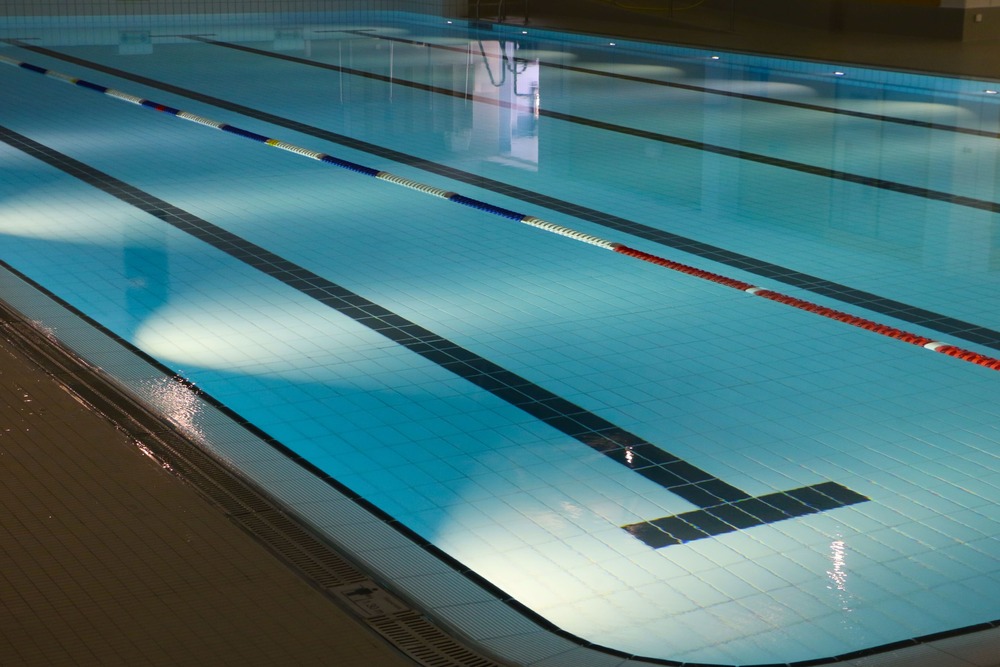
How can you tell if your pool is leaking vs. evaporating?
The first step to pool leak detection is to determine if you’re losing water to evaporation or an actual leak. This distinction is key, especially for outdoor pools where heat, wind, and sun exposure cause normal water loss.
The bucket test
A simple yet effective method involves filling a container with water from the pool itself and placing it on a pool step. Mark the water level inside the container and the pool’s water level outside. After 24 hours, compare the two drops: if the pool loses more water than the container, there is likely a leak. This basic test helps you avoid unnecessary repairs.
Refining the diagnosis
To narrow down the source, repeat the bucket test twice: once with the filtration system turned off and once with it running. If water loss increases when the pump is active, the source is likely in your plumbing—pipes, valves, connections, or pump components. If the loss is similar either way, the inspection should focus on the pool shell, skimmers, lights, drain, or seals.
Early warning signs to watch for
Beyond water level drops, watch for: frequent need to refill the pool, visible moisture around the perimeter, loss of pressure in the system, visible cracks or loose tiles, air entering the circuit, or irregular operation of the filtration system. These symptoms often appear before massive water loss becomes obvious.
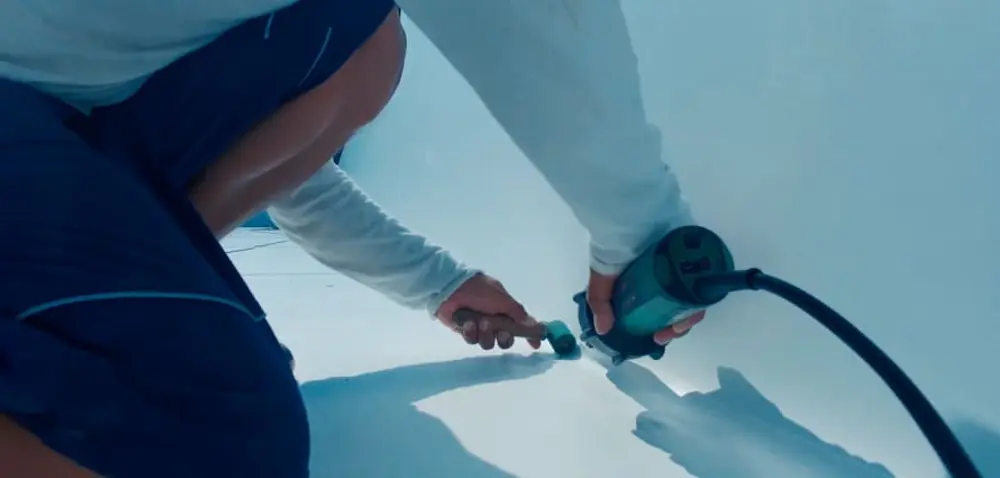
Where do pool leaks commonly occur?
Pool leaks develop in predictable locations. Identifying where to look can dramatically speed up your leak detection process.
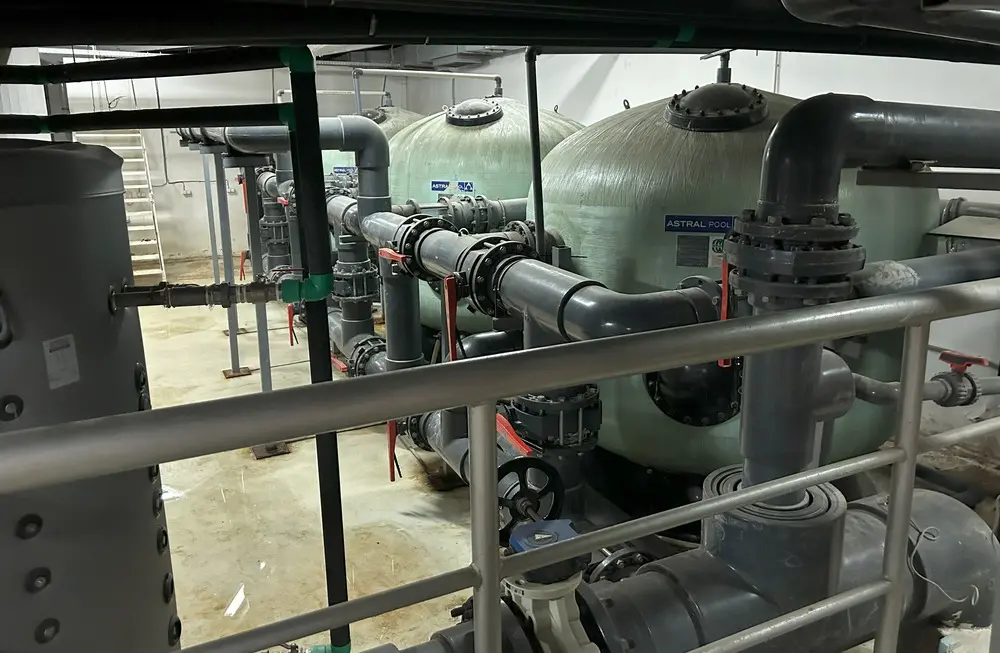
Equipment area (pump, filter, valves)
These are the easiest leaks to find and address. Check for drips, persistent moisture, pressure drops, or loss of flow around pump connections, filter seals, valves, and visible pipes. These leaks often show water accumulating in the equipment room.
Skimmers and wall penetrations
Skimmers are sensitive areas constantly in contact with the water level and pool liner. Check for cracks, aged joints, gaps between parts, and loss of watertightness. Also inspect discharge nozzles, vacuum inlets, lights, drains, and wall penetrations.
Pool basin and structure
In concrete pools, not all cracks indicate a leak, but any new crack, open joint, loose tile, or area with persistent stains should be assessed. In above-ground pools with vinyl liners, inspect the liner for punctures, seams, and stress points. The problem often lies in joints between the basin and built-in components.
Underground plumbing (most challenging)
Buried pipes are difficult to access. A drop in pressure, air ingress, irregular flow, or moisture appearing on the ground may indicate a leak in a pipe or connection. These require professional pressure testing or sophisticated leak detection equipment to pinpoint accurately.
Smart pool leak detection: Prevention beyond manual testing
Modern technology transforms pool leak detection from reactive troubleshooting to proactive prevention. While manual testing identifies existing leaks, smart monitoring systems catch problems within hours instead of weeks.
Real-time water monitoring systems
Advanced sensors continuously monitor pressure, flow rates, and water quality. Automated systems detect anomalies that indicate developing leaks and send immediate alerts to operators. This allows intervention before significant water loss occurs. Discover Fluidra’s smart monitoring solutions that track pool performance in real-time.
Acoustic and pressure testing technology
Professional leak detection equipment uses electronic listening devices (hydrophones) to hear leaks in pipes and confirm exact locations. Pressure testing isolates sections of plumbing to narrow down leak sources without excavation. These methods reduce detection time by 80% compared to manual inspection.
Preventive benefits over traditional approaches
Smart systems reduce water waste, maintain consistent chemical balance, lower energy costs, and extend pool lifespan. They also provide historical data to identify patterns and prevent recurrence. For commercial operators, the ROI typically materializes within months through reduced water consumption and chemical usage.
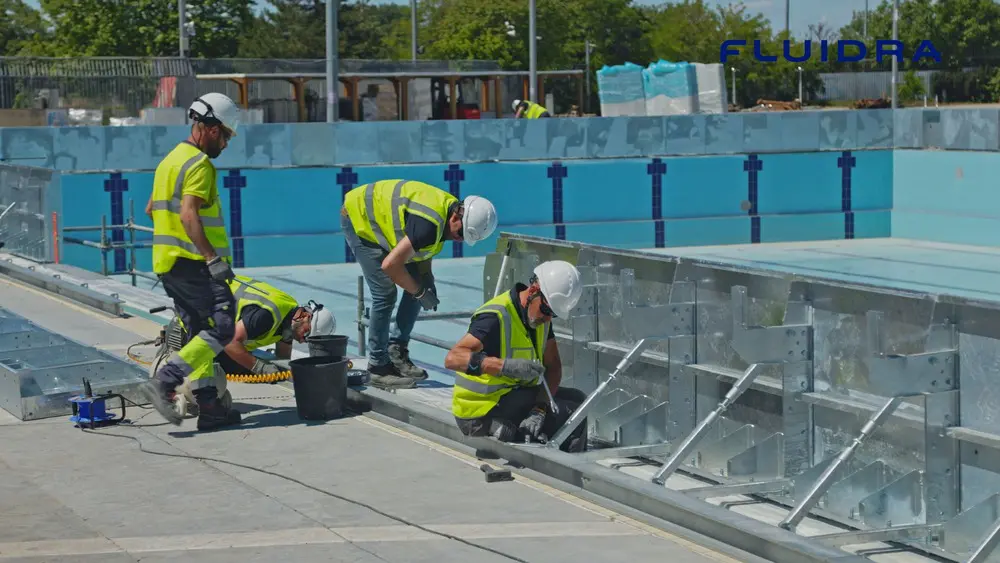
What should you do when you confirm a pool leak?
Once a leak is confirmed, avoid improvised solutions. Continuously refilling the pool does not fix the problem and can increase water consumption, disrupt the chemical balance, and exacerbate potential damage.
Document and assess
Record how much water the level drops, over what period, whether it occurs with the filtration system on or off, which areas show signs of moisture, and any associated symptoms. This information helps pinpoint the source and facilitates more precise repair.
Choose your repair approach
If the leak is in a visible and accessible location (connection, valve, small puncture in removable pools), it can often be addressed with material-specific repairs. However, when leaks affect the pool basin, built-in components, or buried pipes, professional inspection is advisable to pinpoint the exact location without unnecessary construction work.
Think long-term
Addressing a leak promptly protects infrastructure, improves water efficiency, reduces operating costs, and contributes to sustainable asset management. Professional filtration, monitoring, and maintenance solutions allow you to optimize the pool’s performance and extend its lifespan.
How can you prevent swimming pool leaks from occurring?
The preferable scenario is not experiencing leaks in the first place. Prevention requires strategic choices at design and operational levels.
Design and material selection
Choose materials and construction methods that minimize leak risk. Modern panel systems offer advantages over traditional concrete construction: no risk of cracks, faster installation, and easier access for repairs. Quality components—valves, fittings, seals designed for durability—reduce failure points.
Regular maintenance schedules
Establish seasonal inspection routines (spring before opening, fall before closing) and weekly checks during heavy use. Include pressure testing of plumbing, visual inspection of visible components, and detailed assessment of skimmers, penetrations, and seals. Regular maintenance catches small issues before they become expensive problems.
Continuous monitoring
Smart water management systems provide continuous oversight without requiring manual vigilance. Automated monitoring of pressure, flow, and water loss patterns alerts operators immediately to emerging problems. This preventive approach is dramatically more cost-effective than reactive repairs.
Conclusion
Swimming pool leak detection is not a luxury—it’s essential for protecting your investment and reducing operational costs. By understanding how to identify leaks early, choosing the right detection method, and implementing preventive measures, pool operators protect infrastructure and ensure long-term reliability. Modern smart monitoring systems make detection faster and more reliable than ever before.
Whether you manage a residential, commercial, or public pool, regular inspections combined with proactive maintenance—and ideally supported by smart water management technology—ensure your pool remains safe, efficient, and cost-effective for years to come. Contact Fluidra today to learn how smart monitoring can transform your pool management strategy.
Frequently Asked Questions (FAQs)
How do I know if my pool is really leaking or just evaporating?
Normal evaporation is 2-2.5 cm of water per week. Use the bucket test: fill a bucket with pool water, place it on a pool step, and mark the water level. After 24 hours, if the pool has lost more water than the bucket, you have a leak. Repeat with the pump off and on to determine whether the leak is in the shell or plumbing.
How much does professional pool leak detection cost?
Professional leak detection typically costs €200-500+ depending on pool size, complexity, and location. However, detecting a leak early can save thousands in water bills, chemical costs, and repair expenses. For many commercial operators, professional inspection is a worthwhile investment, especially for large or complex pools with buried plumbing.
Can small leaks be repaired myself, or do I need a professional?
Small, visible leaks in accessible locations (pump connections, valve threads, visible punctures in removable pools) can often be repaired with basic tools and materials. However, structural cracks, buried pipes, or leaks in pool shells typically require professional inspection and repair to ensure lasting solutions and avoid costly mistakes.
What is the advantage of smart pool monitoring over manual testing?
Smart monitoring systems track water loss, pressure, flow, and chemistry continuously, detecting anomalies within hours rather than weeks. They send automatic alerts, eliminate guesswork, and help you address problems before they become expensive. This preventive approach reduces water waste by up to 40%, maintains chemical balance automatically, and extends pool lifespan.
How often should I inspect my pool for leaks?
For commercial and residential pools, inspect at least seasonally (spring before opening, fall before closing). Check weekly during heavy use periods. For above-ground pools or those with known vulnerabilities, increase inspection frequency. If you have smart monitoring, the system alerts you automatically. Regular inspections combined with monitoring ensure early detection and cost savings.
Published on October 16, 2024, updated on June 2, 2026