

 0.04 (+0.19%)
 Go back
 Saunas provide a range of major health benefits, including skin care, muscle relaxation, and detoxification. The heat releases toxins through sweating, reactivates blood circulation, and improves breathing. Whether designing a wet sauna (Turkish bath or steam bath, where temperature doesn’t exceed 70°C and humidity reaches 100%) or a dry Finnish sauna (80-100°C with humidity below 20%), choosing the right wood for sauna installations is critical for durability, user comfort, aesthetics, and maintenance costs.
Beyond these traditional types, there are many others: tropical baths, bio saunas, Russian saunas, salt saunas, and infrared saunas, each with unique design considerations. Whether choosing between cedar vs hemlock, exploring thermowood, or evaluating European softwoods, understanding each wood’s properties ensures optimal performance for your wellness facility.


 Contact us
 Close form
What makes good wood for sauna installations?
Before selecting specific wood types, understanding the essential criteria ensures your sauna performs well and lasts decades.
Low thermal conductivity is paramount—wood that heats slowly won’t burn skin on benches even at high temperatures. Minimal resin and sap content is critical, especially for benches; resin melts when heated, sticks to skin, causes burns, and creates difficult stains. Moisture resistance ensures wood withstands high humidity without warping, cracking, or rotting.
Dimensional stability means wood maintains its shape through extreme temperature and humidity cycles. Pleasant natural aroma enhances the sensory experience—cedar and hemlock have distinctive scents that define premium saunas. Aesthetic appeal through color and grain pattern contributes to the relaxation atmosphere. Durability varies significantly: quality sauna woods last 20-40+ years depending on species and treatment.
In short: Good wood for sauna must have low thermal conductivity (won’t burn skin), minimal resin content, high moisture resistance, and dimensional stability to withstand extreme heat and humidity cycles.
What are the best types of wood for sauna?
When designing a sauna for a wellness space, it’s important to analyze the local environment, surrounding conditions, desired aesthetic experience, and project business objectives alongside proper ventilation, insulation, and efficient heating. Wood is the main component in sauna installations to ensure proper insulation.
Premium hardwoods: aspen and alder
Common aspen is a deciduous tree in the willow family that grows in Europe, Asia, and northern Africa. It is an ideal material for sauna benches because it doesn’t secrete resin, splinter, or overheat. Its light tone and smooth texture are also perfect for painting if desired. Best for: Sauna benches. Lifespan: 15-20 years. Cost tier: Moderate.
Common alder (black alder) offers a reddish tone and pleasant texture. This deciduous tree has hardy, waterproof wood that doesn’t overheat. It’s widely used for interior sauna materials with various thermally modified and brushed finishes available. Best for: Interior finishing, benches. Lifespan: 20-25 years. Cost tier: Moderate.
North American conifers: cedar and hemlock
Western red cedar is an evergreen coniferous tree in the cypress family. It is perfect for sauna benches and interiors because it doesn’t secrete resin or overheat, and it is also waterproof. Known for its pleasant aroma and reddish color with a range of natural shades, cedar makes an attractive option for both interior and exterior paneling. Best for: Benches, interior paneling, exterior cladding. Lifespan: 30-40 years (longest-lasting sauna wood). Cost tier: Premium ($8-$15 per sq ft).
Canadian hemlock is soft with a coarse grain and light buff color. Durable and knot-free, wood from this coniferous tree of the pine family is ideal for inside saunas, since it doesn’t warp and radiates heat evenly. It produces a delicate, relaxing aroma. Best for: Interior walls, ceilings. Lifespan: 20-25 years. Cost tier: Moderate-premium ($5-$10 per sq ft).
European softwoods and specialty options
Norway spruce is an evergreen coniferous tree of the pine family that is almost white with a light yellowish undertone. Often used as timber for saunas, it’s generally preferred for exterior walls. Best for: Exterior walls. Lifespan: 15-20 years. Cost tier: Budget.
Scots pine is a coniferous tree most commonly used for outer walls. The wood responds properly to thermal modification, while the natural pattern can be highlighted through special brushing techniques. Best for: Outer walls (avoid for benches—secretes resin). Lifespan: 15-20 years untreated, 25-30 years thermally modified. Cost tier: Budget.
American ash is a deciduous tree in the Oleaceae family that produces durable, strong, decorative wood with attractive texture. Thermally modified ash takes on a dark brown color. Best for: Exterior walls. Lifespan: 25-30 years. Cost tier: Premium.
Poplar belongs to the willow family with naturally pale yellow color and smooth texture. Ideal for sauna benches and interiors since the wood has no exposed knots and doesn’t splinter, secrete resin, or overheat. Best for: Benches, interiors. Lifespan: 15-20 years. Cost tier: Budget-moderate.
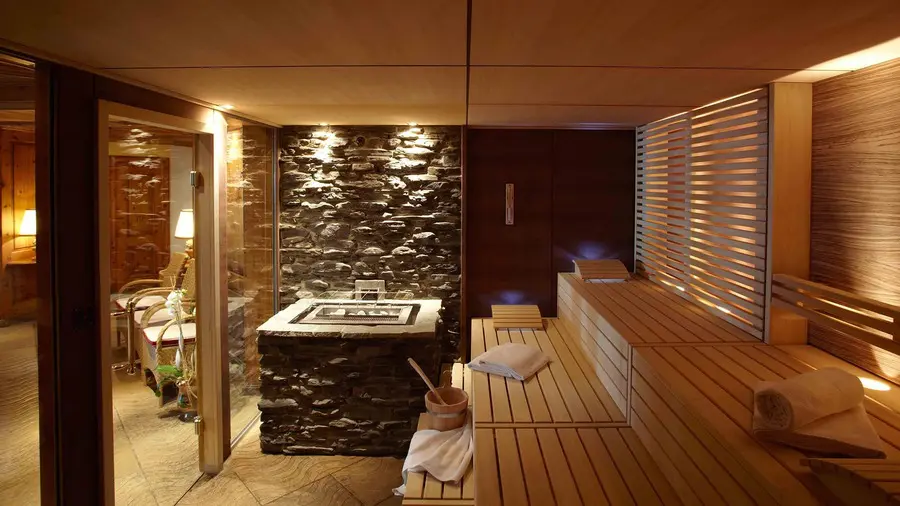
Cedar vs hemlock: which is best for your sauna?
The two most debated woods for sauna installations are western red cedar and Canadian hemlock.
When to choose cedar
- Longevity: Cedar lasts 30-40 years vs hemlock’s 20-25 years—best ROI for permanent commercial installations.
- Premium aesthetic: Reddish color with natural variation creates luxury spa atmosphere.
- Aromatic experience: Distinctive scent is the signature of premium saunas. Natural oils provide antibacterial properties.
- Exterior applications: Superior weather resistance for outdoor saunas or challenging climates.
- Investment: $8-$15 per sq ft, but longevity justifies cost for permanent facilities.
When to choose hemlock
- Cost-effective: 30-40% less than cedar while delivering excellent performance.
- Neutral aesthetic: Light buff color provides clean, minimalist Scandinavian look.
- Even heat distribution: Soft, coarse grain radiates heat evenly—ideal for walls and ceilings.
- Delicate aroma: Subtle scent suits guests sensitive to strong aromatics.
- Investment: $5-$10 per sq ft.
Feature | Western Red Cedar | Canadian Hemlock |
Lifespan | 30-40 years | 20-25 years |
Cost per sq ft | $8-$15 (premium) | $5-$10 (moderate) |
Color | Reddish with variation | Light buff |
Aroma | Distinctive, strong | Delicate, subtle |
Best application | Benches, exterior, luxury | Walls, ceilings, budget |
Bottom line: For luxury hotel spas and permanent installations where longevity and premium aesthetic matter, cedar is the superior choice. For cost-conscious projects, Nordic-style minimalism, or lighter color palettes, hemlock delivers excellent value.
What is thermal modification and why does it matter?
Thermal modification (thermowood) heats wood to 180-230°C in an oxygen-free environment, permanently altering its cellular structure.
Benefits: Lifespan extended by 50-100% (Scots pine: 15 years → 25-30 years). Water absorption reduced by 50%. Significantly less warping and cracking. Rich brown tones without chemicals or stains.
Best candidates: Scots pine, ash, radiata pine, alder, and poplar respond particularly well to thermal modification.
When it’s worth it: The 30-50% price premium is justified for steam saunas, outdoor saunas, and high-traffic commercial facilities where durability delivers long-term cost savings.
Astralpool’s custom sauna solutions incorporate thermally modified wood options tailored to each facility’s needs.
Which wood should you use for sauna benches vs walls vs ceilings?
Wood selection varies significantly by sauna component due to different performance requirements.
Sauna benches (most critical—direct skin contact)
Requirements: Low thermal conductivity (won’t burn skin), zero resin/sap secretion, smooth surface, doesn’t splinter.
Best options:
- Aspen (most popular—doesn’t overheat, splinter, or secrete resin)
- Western red cedar (premium—comfortable, aromatic, 30-40 year lifespan)
- Poplar (budget-friendly alternative with good performance)
Avoid: Scots pine, Norway spruce—these secrete resin when heated, which melts, sticks to skin, and causes burns.
Interior walls
Requirements: Moisture resistance, aesthetic appeal, insulation properties.
Best options:
- Canadian hemlock (even heat radiation, light color, cost-effective)
- Alder (reddish tone, waterproof, attractive)
- Thermally modified Scots pine (dark color, enhanced durability)
Ceilings
Requirements: Lightweight, moisture resistant, doesn’t warp.
Best options:
- Norway spruce (light color, lightweight, budget-friendly)
- Hemlock (soft, doesn’t warp, even heat distribution)
Exterior walls (if applicable)
Requirements: Weather resistance, UV stability, aesthetic durability.
Best options:
- Western red cedar (superior weather resistance, natural oils protect against decay)
- Thermally modified ash (dark brown, distinctive pattern, highly durable)
How do you maintain wood in a sauna?
Wood for sauna installations requires special treatment and regular maintenance. Without proper protection, exposure to extreme temperatures and moisture affects structural integrity and appearance.
Temperature fluctuations cause cracking or warping. Treat all components every 6-12 months with breathable wood preservative (oil or wax) to prolong life and improve dirt/moisture resistance. Annual maintenance costs: $200-$500 for commercial saunas. Proper maintenance extends wood lifespan by 30-50%.
Cleaning: Wipe surfaces with soft brush or cloth. Never use disinfectants (bleach wood) or pressure washers (damage structure). For difficult stains, sand the surface: moisten, dry, polish with fine sandpaper, then treat with preservative.
Additional tips:
- Run heater 30 minutes with air vent open after cleaning
- No wet swimsuits (use seat covers)
- Ensure good ventilation; lift benches to dry
What about sustainability and wood sourcing for saunas?
Commercial wellness facilities increasingly prioritize sustainable materials.
FSC and PEFC certifications ensure wood comes from responsibly managed forests. Local sourcing reduces carbon footprint—North American cedar/hemlock from Pacific Northwest for US/Canada projects, European spruce/pine from Nordic countries for EU installations.
Carbon benefits: Wood-based saunas store carbon long-term. At end-of-life, untreated wood can be composted; thermally modified wood recycled as biomass fuel.
Astralpool prioritizes FSC/PEFC-certified suppliers and works with clients to select locally sourced materials, reducing environmental impact while maintaining quality.
Choosing the best wood for your sauna project
Whether selecting premium cedar for luxury spa longevity, cost-effective hemlock for Nordic minimalism, or thermally modified woods for extreme durability, the right wood choice balances performance, aesthetics, budget, and maintenance requirements.
Available in different kinds of wood and designed with creativity, accuracy, and attention to detail, Fluidra’s Astralpool saunas deliver outstanding aesthetics and efficiency, making them an excellent choice for wellness spaces. Our specialists guide commercial wellness facilities through wood selection, design, installation, and maintenance—ensuring your sauna delivers exceptional guest experiences for decades.
Frequently asked questions
What is the best wood for sauna?
The best wood for sauna depends on application and budget. For benches (direct skin contact), aspen and western red cedar are ideal due to low thermal conductivity, no resin secretion, and smooth texture that won’t burn skin. For walls, Canadian hemlock offers even heat distribution and cost-effectiveness. For premium longevity and aromatic experience, western red cedar excels across all applications with a 30-40 year lifespan.
Cedar vs hemlock for sauna: which should I choose?
Cedar is the premium choice for luxury saunas: 30-40 year lifespan, distinctive aroma, reddish color, superior weather resistance, $8-$15 per sq ft. Hemlock is a cost-effective alternative: 20-25 year lifespan, light buff color, delicate aroma, excellent heat distribution, $5-$10 per sq ft. Choose cedar for permanent high-end installations where longevity justifies premium investment. Choose hemlock for budget-conscious projects or Nordic minimalist aesthetics.
What wood should NOT be used in sauna?
Avoid Scots pine and Norway spruce for sauna benches—these softwoods secrete resin (sap) when heated, which melts, sticks to skin, causes burns, and creates difficult stains. These woods are acceptable for exterior walls where direct skin contact doesn’t occur. Also avoid chemically treated or stained woods, as high temperatures can release harmful fumes into the confined sauna environment.
What is thermowood and is it worth it for saunas?
Thermowood (thermally modified wood) is heated to 180-230°C in an oxygen-free environment, permanently altering its cellular structure. Benefits include 50-100% longer lifespan, 50% better moisture resistance, improved dimensional stability, and darker color without chemicals. Worth the 30-50% price premium for high-humidity steam saunas, outdoor saunas, or high-traffic commercial facilities where enhanced durability delivers long-term cost savings.
How long does wood last in a sauna?
Sauna wood lifespan varies by species and maintenance: Western red cedar (30-40 years), Canadian hemlock (20-25 years), thermally modified Scots pine (25-30 years), alder (20-25 years), aspen (15-20 years), Norway spruce (15-20 years). Proper maintenance—treating with breathable wood preservative every 6-12 months, regular cleaning, good ventilation—extends lifespan by 30-50%, making it a critical investment in your sauna’s longevity.
Published on August 31, 2022, updated on March 3, 2026