

 -0.02 (-0.12%)
 Tornar
 The way we think about swimming pools in cities is changing. No longer relegated to sprawling suburban backyards, urban pools are emerging as essential community amenities that reshape how metropolitan neighborhoods live, connect, and prioritize wellness. From Barcelona to Singapore, from Miami to Amsterdam, cities worldwide are recognizing that compact, thoughtfully designed pools are not luxuries—they are investments in community quality of life.
This article explores why urban pools matter for dense cities, how they drive innovation in sustainable water management, and what smart technologies are shaping the future of urban aquatic spaces.
Submergeix-te més amb l’eBook


 Contacte
 Tancar
Why Urban Pools Matter: The Community Impact
Dense urban environments face a fundamental challenge: how to provide wellness amenities in limited spaces while maintaining community cohesion and environmental responsibility. Urban pools address this challenge in unexpected ways.
Health and Wellness in Compact Neighborhoods
City dwellers increasingly prioritize wellness, yet traditional fitness centers lack the holistic appeal of water-based exercise. Swimming pools offer low-impact fitness, mental health benefits, and social connection—all critical for urban residents. Urban pools, by their accessible scale and proximity, invite regular participation rather than occasional visits.
Community Building and Social Cohesion
Public and semi-public urban pools become gathering spaces where diverse communities meet. They foster intergenerational bonds, create safe recreational spaces for children, and strengthen neighborhood identity. Research consistently shows that accessible water features enhance community belonging.
Property Value and Urban Revitalization
Urban pools signal neighborhood investment and quality of life. They attract residents, support local businesses, and strengthen communities. According to IBISWorld industry analysis, the urban pool market has experienced significant growth as cities recognize their role in neighborhood revitalization and resident attraction.
The Design Philosophy Behind Urban Pools
Urban pool design is not about compromise—it is about intention. Modern urban pools reflect sophisticated thinking about space, aesthetics, and functionality.
Maximizing Impact in Limited Space
Contemporary designers embrace constraints as creative opportunities. Rather than asking “how big can we make it?” they ask “how can we optimize this space for multiple uses?” Multi-functional zones, flexible configurations, and integrated landscaping transform compact footprints into vibrant community spaces.
Aesthetic Integration with Urban Fabric
Successful urban pools blend seamlessly into neighborhood character. Material selection, color palettes, and architectural language reflect local identity while meeting international design standards. A pool in Barcelona looks and feels different from one in Berlin—because it should.
Accessibility and Inclusivity as Core Principles
Urban pools prioritize accessibility for people of all ages and abilities. Gentle slopes, multiple entry points, and thermal comfort features ensure that diverse community members can participate meaningfully.
Sustainability: The Future of Urban Water Management
Environmental responsibility is no longer optional for urban pool development. Cities face water scarcity, energy demands, and climate pressures that demand innovative approaches.
Rethinking Water Conservation
Modern urban pools employ advanced filtration, recirculation, and water-saving technologies that reduce consumption compared to traditional systems. Innovative approaches make urban pools increasingly viable in water-stressed regions.
Natural and Chemical-Free Alternatives
A growing movement toward natural pools and bio-filtered systems reflects changing values around chemical use and environmental stewardship. These systems use aquatic plants, beneficial bacteria, and gravel filtration to maintain water quality sustainably.
Fluidra leads this movement with comprehensive eco-friendly and sustainable pool solutions that align environmental goals with exceptional recreational experiences.
Energy Efficiency and Renewable Power
Solar heating, variable-speed pumps, and smart energy management systems reduce the carbon footprint of urban pools. The EPA WaterSense program provides guidance on water-efficient pool design and operation. Forward-thinking cities increasingly mandate renewable energy integration as a condition for development.
Smart Pool Technology: Innovation Reshaping Urban Aquatics
The convergence of IoT, automation, and real-time monitoring is revolutionizing how urban pools operate. Smart technology addresses the fundamental challenge: maintaining optimal water quality and safety while minimizing operational burden.
Real-Time Water Quality Intelligence
Advanced sensor networks continuously monitor water parameters. AI-powered systems predict and prevent problems before they occur, ensuring consistent quality with minimal manual intervention. For urban pools in dense neighborhoods with strict operational constraints, this intelligence is transformative.
Automated System Optimization
Smart automation adjusts circulation, filtration, and chemical dosing based on actual demand rather than fixed schedules. This responsive approach reduces energy consumption, extends equipment life, and maintains safety—all critical for urban installations.
Remote Management and Transparency
Mobile applications and cloud-based dashboards enable operators to monitor and manage pools remotely. This capability is particularly valuable for urban facilities where operational complexity is high and expertise may be scarce.
Discover how Fluidra smart pool solutions bring intelligent management to urban aquatic spaces, reducing costs while elevating safety and user experience.
Urban Pools and Climate Adaptation
As cities face increasingly extreme weather, urban pools are evolving to address climate resilience. Progressive designs integrate pools into broader community infrastructure strategies.
Stormwater Management Integration
Innovative urban pools function as part of stormwater management systems. They capture and filter runoff, reducing flooding and improving water quality. This dual-purpose approach demonstrates how pools become community infrastructure, not just amenities.
Urban Heat Island Mitigation
Water features moderate local temperatures and provide psychological cooling benefits. Urban pools, combined with surrounding landscaping, help reduce the heat island effect—a growing concern in densely built cities.
Community Resilience Planning
Thoughtfully designed urban pools become focal points for community resilience. They provide cooling centers during heat waves and create gathering spaces for emergency preparedness planning.
Global Trends: How Cities Are Reimagining Urban Pools
Around the world, cities are experimenting with innovative urban pool models:
Pop-Up and Temporary Pools
Temporary installations allow neighborhoods to test demand and design before permanent commitment. These agile approaches reduce risk and build community engagement.
Rooftop and Floating Installations
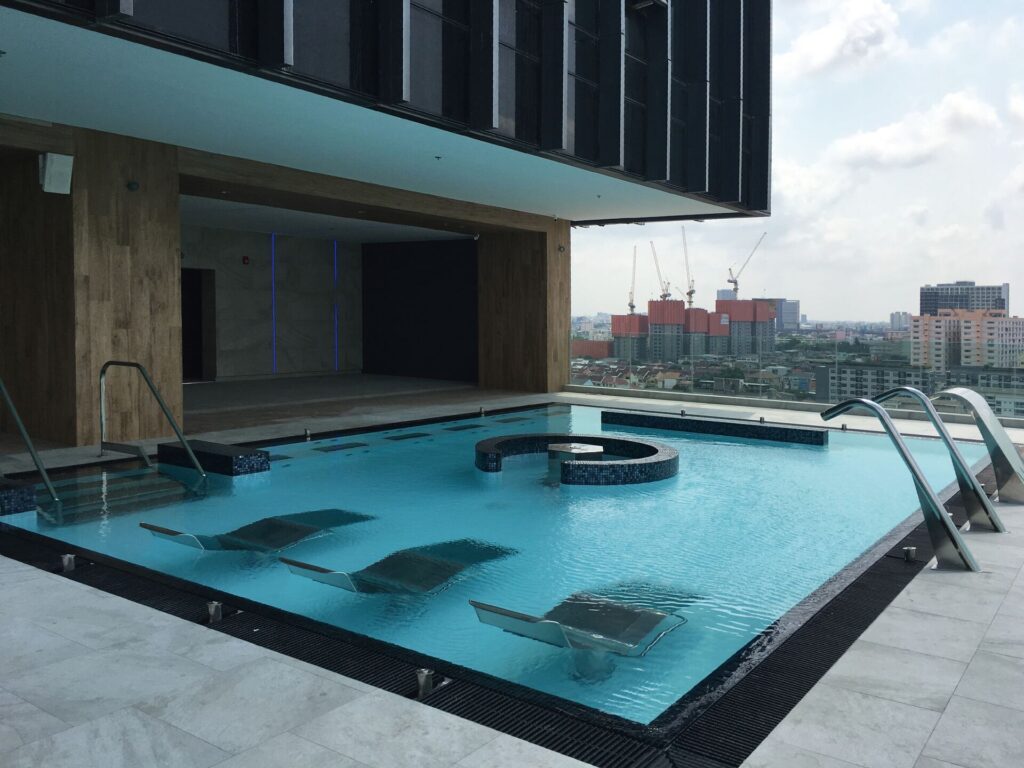
Cities with extreme space constraints embrace vertical solutions. Rooftop and floating pools maximize efficiency while creating landmark amenities that define neighborhood identity.
Community-Led Design and Management
Forward-thinking cities involve residents in pool design and governance, ensuring installations reflect actual community needs. This participatory approach increases usage and strengthens social bonds.
Integration with Transit and Mixed-Use Development
New urban pools anchor mixed-use developments near transit, reducing car dependency and increasing accessibility. This integrated planning maximizes community benefit and supports sustainability goals.
Addressing Equity and Access
Not all communities benefit equally from wellness amenities. Progressive cities intentionally design urban pools to serve underserved neighborhoods.
Equitable Siting and Affordability
Cities prioritize pool development in neighborhoods with lowest access to recreational water. Pricing models, free hours, and community programs ensure that income does not limit participation.
Cultural Responsiveness
Successful pools reflect community cultures. Design decisions—from facility hours to programming—demonstrate respect for diverse users. Safety standards, such as those outlined in international anti-entrapment regulations, protect vulnerable users while inclusive design transforms pools into culturally meaningful community spaces.
Innovation: The Foundation for Urban Pool Success
Innovation is essential for urban pools. Smart water management reduces operational complexity. Sustainable filtration minimizes environmental impact. Advanced materials enable durability in dense environments. Design innovations unlock functionality from limited space. Together, these advances make urban pools feasible, economical, and responsible.
Companies like Fluidra lead this innovation, developing solutions specifically designed for urban contexts. By combining engineering expertise, sustainability commitment, and user-centered design, Fluidra enables cities worldwide to bring high-quality aquatic experiences to dense neighborhoods.
Conclusion: Urban Pools as Community Infrastructure
Urban pools represent a fundamental shift in how cities approach wellness, sustainability, and community building. They reject the false choice between density and quality of life, demonstrating that thoughtful design, smart technology, and environmental responsibility can coexist.
As cities worldwide grow denser and climate pressures intensify, urban pools will become increasingly important. They offer solutions to multiple urban challenges simultaneously: health, community, sustainability, and resilience.
The urban pools reshaping cities today are not compromises—they are innovations. For cities, developers, and communities exploring urban pool possibilities, expertise matters. Connect with Fluidra to discover how smart, sustainable solutions can transform your urban space into a thriving community amenity.
Frequently Asked Questions
Q1: What makes urban pools different from traditional pools?
Urban pools prioritize space efficiency, community impact, and sustainability. They are designed specifically for dense neighborhoods, featuring innovative technology, multi-functional spaces, and environmental features.
Q2: Can urban pools be truly sustainable?
Yes. Modern urban pools incorporate advanced filtration, energy-efficient systems, water-saving technologies, and renewable energy. Some facilities achieve remarkable sustainability metrics while delivering excellent safety and user experience.
Q3: How do smart technologies improve urban pool management?
Smart systems automate water monitoring, optimize energy, enable remote management, and predict maintenance. They reduce operational burden, lower costs, and maintain safety—all critical for urban facilities.
Q4: What community benefits do urban pools provide?
Urban pools enhance public health, strengthen social connection, support neighborhood revitalization, and increase community wellbeing. They provide accessible recreation and signal neighborhood investment in resident quality of life.
Q5: How can cities ensure urban pools serve all community members?
Equitable pools feature affordable access, culturally responsive programming, thoughtful accessibility design, and community-led planning. They operate as public services designed to serve everyone.