

 0.04 (+0.22%)
 Go back
 In bustling cities where land is precious and community needs are growing, a well-designed municipal pool is far more than just a swimming venue—it’s a community hub that promotes public health, social connection, and urban vitality. Yet building and operating a municipal pool in dense urban environments presents unique challenges: maximizing limited space, managing complex water systems, meeting performance standards, and minimizing operational costs.
This guide walks you through everything city leaders, facility managers, and aquatic professionals need to know about municipal pools—from initial design concepts to cutting-edge smart water management systems that save money and reduce environmental impact.


 Contact us
 Close form
What is a municipal pool and why do cities need them?
A municipal pool is a public aquatic facility owned and operated by a city or local government, providing swimming and water recreation opportunities for all residents. With 10.7 million pools worldwide and growing demand for community water facilities, these spaces serve as vital hubs for public health and social connection.
Municipal pools serve three primary functions: recreation (summer fun, family gatherings), fitness (lap swimming, water aerobics), and community gathering (social connection, cultural events). Beyond these immediate benefits, cities with quality aquatic facilities see parks become 3x more attractive, boosting property values and attracting families. Learn more about designing welcoming pools.
Health impact: Swimming programs reduce water-related accidents, improve physical fitness across all age groups, and provide mental health benefits through recreational water activity. Quality municipal pools unlock these benefits for entire communities.
How to design a municipal pool for dense urban environments?
Designing a municipal pool in cities with limited space requires strategic thinking. The best approach combines multi-functional design, universal accessibility, and safety infrastructure into a cohesive experience. Discover best practices for urban aquatic design.
Space optimization strategies
Multi-use pools serve dual purposes (lap swimming during mornings, recreational play afternoons). Zero-entry pools allow easy access for children and seniors. Splash pads maximize play space without requiring deep water. Vertical design (underground parking below deck) saves surface land. For detailed guidance, see our article on sustainable pool design.
Universal accessibility and inclusive design
Accessible entry (lifts, ramps), adapted changing facilities, and clear wayfinding ensure all community members can participate. Inclusive design isn’t just a legal requirement—it’s community-first design that welcomes 15-20% of your population who may face mobility challenges, ensuring everyone can enjoy aquatic activities.
Safety and aesthetics
Lifeguard sightlines, emergency protocols, and clear signage keep swimmers safe. Local art, landscaping, and architectural elements reflect community identity, making the pool a neighborhood landmark rather than a generic facility. Safety infrastructure combined with aesthetic appeal creates spaces where communities want to gather.
How do you manage water quality and maintenance in a municipal pool?
Water quality management is the foundation of safe, enjoyable pools. This requires consistent monitoring and disciplined maintenance routines. For detailed operational guides, explore our water quality management solutions.
Water chemistry basics
Three key metrics define healthy pool water: pH balance (ideal 7.0-7.8) maintains disinfectant effectiveness; chlorine or alternative disinfectants (appropriate residual levels) protect against contaminants; alkalinity (80-120 ppm) stabilizes pH. Test twice daily during operation for consistent quality.
Maintenance schedule
Daily: Skim debris, brush walls, check chemistry. Weekly: Backwash filters, test alkalinity, inspect equipment. Monthly: Microbiological samples, deep cleaning. Quarterly: Professional inspections. Our maintenance automation systems help teams stay on schedule effortlessly.
Water circulation system
The recirculation system is your pool’s heart. Municipal pools should achieve complete water turnover every 4 hours—meaning all water passes through filtration systems daily, removing contaminants before bather load builds. Discover efficient water circulation technologies that maximize water clarity and safety.
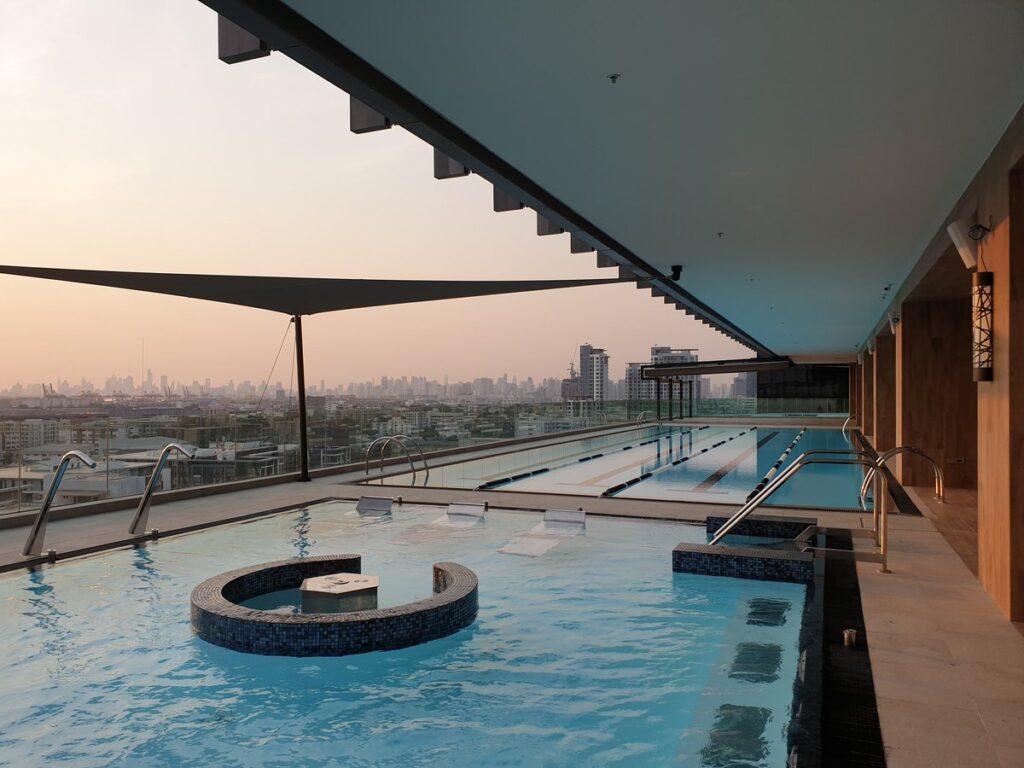
How can technology and automation reduce costs and improve efficiency?
MODERN SOLUTIONS: Smart pool technology transforms municipal pools into efficient, profitable operations. Explore Fluidra’s smart water management systems.
Smart water monitoring systems
Real-time sensors monitor pH, disinfectant levels, and flow rates continuously. Our automated monitoring solutions detect pressure anomalies, equipment failures, and chemical imbalances before they become costly emergencies. Staff receives mobile alerts—preventing expensive shutdowns.
Automated chemical dosing
Precise, programmed chemical injection reduces waste by 40%, cuts operational costs 15-20%, and eliminates human dosing errors. See how smart dosing systems save municipalities €50-100k annually on chemical purchases alone.
Energy efficiency technology
High-efficiency circulation pumps, LED pool lighting (60% energy savings vs. incandescent), and solar heating systems reduce energy consumption significantly. Learn about sustainable pool technologies that cut operational costs while protecting the environment.
What are the costs and budgeting considerations for municipal pools?
Understanding financial realities helps cities make informed decisions. A typical 50-meter municipal pool costs €2-5M to build, depending on location and features.
Annual operating costs
Budget €350k-450k annually: staff (€200k), utilities (€80k), chemicals (€40k), maintenance (€50k). This varies by climate and facility size. Discover how operational efficiency solutions reduce these costs.
Revenue streams
Well-managed pools generate €250-400k annually through memberships, day-use fees (€5-8), swim lessons, lap lane rentals, and special events. Learn about revenue optimization strategies. This partially offsets operating costs, reducing municipal subsidy burden.
Lifecycle planning
With proper maintenance, pools last 50 years. Plan major renovations at 20 and 30-year marks (deck resurfacing, equipment upgrades). Reference lifecycle management guidelines. A well-maintained pool from the 1970s can still be operational and profitable today.
Conclusion
A well-managed municipal pool is an investment in community health, urban vitality, and long-term sustainability. Success requires balancing design excellence, operational rigor, performance standards, and smart technology. Cities that embrace modern water management systems—combined with strong staff training and community engagement—see higher satisfaction, better financial outcomes, and safer facilities.
Frequently Asked Questions
How often should municipal pool water be tested?
Water quality testing should follow best practice standards: pH and disinfectant levels tested at least twice daily during operation (morning opening and afternoon peak). Alkalinity should be tested weekly, and microbiological samples monthly. All results must be documented in a maintenance logbook to track compliance and identify trends. Regular testing ensures consistent water safety and appropriate treatment adjustments.
What makes a pool safe and accessible for all community members?
Universal accessibility means creating pools that welcome everyone. This includes accessible entry systems (lifts, ramps for wheelchair users), accessible changing facilities, clear signage, proper lifeguard positioning for full visibility, emergency protocols, and gentle slope areas for children and seniors. When pools are designed inclusively, entire families—including those with mobility challenges—can participate fully in water activities.
How long does a municipal pool last?
With proper maintenance and repairs, a municipal pool typically has a 50-year lifespan. However, major renovations may be needed at 20 and 30-year marks (deck resurfacing, equipment replacement, mechanical system upgrades). A well-maintained pool built decades ago can still be operational and profitable. The key is proactive maintenance—addressing small issues before they become expensive problems.
What is the difference between recirculation rate and water turnover?
Recirculation rate refers to the flow of water through the filtration system, measured in gallons per minute (GPM). Water turnover time is how long it takes for all water in the pool to pass through filtration—typically 4 hours or less for municipal pools. Better turnover = cleaner, safer water with fewer chemical requirements. This is why circulation system efficiency directly impacts operational costs and water quality.
Can a municipal pool be profitable?
Yes. Well-managed municipal pools generate revenue through memberships (€100-200/year), day-use fees (€5-8), swim lessons, lap lane rentals, and special events. A typical 50m pool generates €250-400k annually, offsetting operational costs of €350-450k, reducing municipal subsidy burden by 50-60%. Discover revenue optimization strategies through smart management, community engagement, and efficient operations improve profitability significantly.