

 0.1 (+0.56%)
 Go back
 Water slides are a perennial source of joy for children and adults alike. This is why swimming pools with water slides make an excellent addition to holiday destinations, beyond the usual water parks. Hotels, campsites and resorts can benefit greatly from adding water slides, and there are many options for doing so.
How can you add swimming pool slides to your leisure complex, hotel, campsite or resort, and what considerations do you need to take into account? While swimming pool slides are a great addition, they also need to be planned with practical aspects in mind (including water treatment and safety).
This article will explain:
- Why swimming pool slides should be included in your pool environment
- The importance of water treatment
- How to ensure swimming pool slide safety
- What types of pool slide you can choose from


 Contact us
 Close form
Installing water slides in commercial pools transforms a conventional pool into a highly profitable asset that boosts bookings at hotels, resorts, and campgrounds. The success of these aquatic leisure projects lies not in aesthetics, but in the ingenuity of their technical design.
Before deciding on shapes or colors, it is essential to master criteria related to hydraulic engineering, visitor flow management, pool depth, and safety regulations to ensure a safe, durable attraction with an excellent return on investment.
Benefits of water slides for hotel and campground pools
Pool slides transform hotels and campgrounds into leisure destinations in their own right. This feature provides a critical competitive advantage, turning passive swimming into a comprehensive experience that builds loyalty among families and energizes the facility’s common areas. Its main commercial benefits are:
- Greater appeal to families: Water slides create a more dynamic experience for children, teenagers, and their companions.
- Differentiation from the competition: a pool with water attractions stands out more in photographs, reviews, and accommodation comparisons.
- Increased usage time: Users tend to spend more time in aquatic areas that offer a variety of experiences.
- Better use of space: a pool can be transformed from a passive swimming area into a recreational space with a higher turnover of activities.
- Potential for theming: Water slides can be integrated into tropical, family-friendly, wellness, sports, or adventure zones.
- Added value during peak season: When the pool accounts for a large portion of the facility’s activity, attractions help distribute visitor flow and create points of interest.
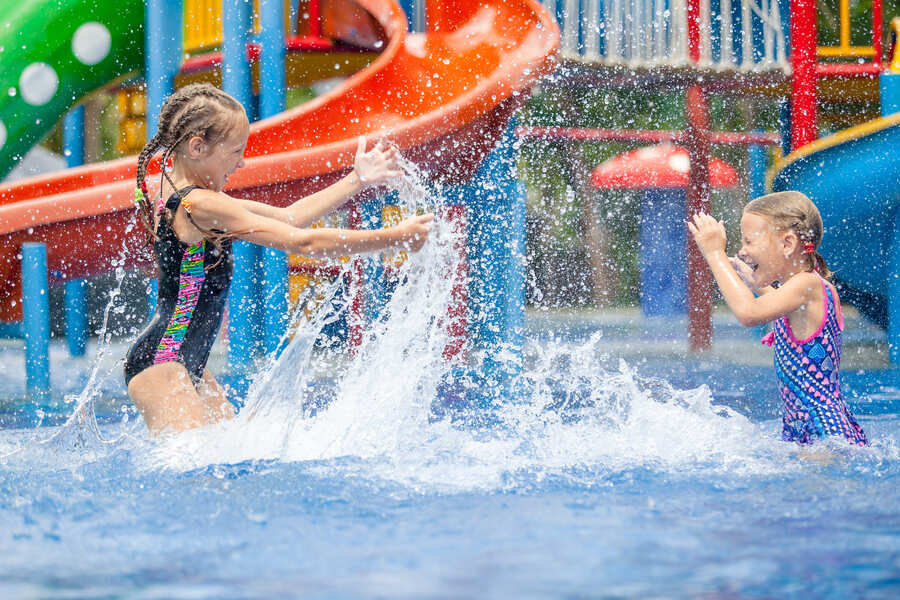
Segmentation and experience design based on user profile
Let’s be clear that not all water slides meet the same need. Therefore, it is essential to adapt the water slide and the experience based on the user profile:
| User Profile | Recommended type of experience | Key design considerations |
|---|---|---|
| Young children | Low-height play features, splash areas, water jets, and mini slides | Maximum visibility, shallow water, and non-slip surfaces |
| Families | Gentle slides, shared pathways, and waiting areas | Safe access, capacity control, and integration with the sun deck |
| Teens | Curves, moderate speed, and themed elements | Material strength, dynamic flow, and visual impact |
| Adults | High-impact attractions and intense thrills | Greater height, steep inclines, and strict regulations |
| Hotels and campgrounds | Design integrated into the architecture of the space itself | Refined aesthetics, noise control, and easy maintenance |
| Water parks | Multiple attractions with varying levels of intensity | High throughput, waiting areas, and water management |
Designing with the target audience in mind ensures that every user has an experience tailored to their age, expectations, and level of independence, maximizing safety and the success of the investment.
Design of pools with children’s slides and splash areas
For young children, the top priority is safety, visibility, and intuitive play. Factors such as a moderate slope, reduced height, and safe access points are essential for slides in children’s pools.
In this segment, splash areas (shallow play zones with water jets, interactive buckets, and small ramps) are the ideal solution for creating dynamic and safe experiences, minimizing the risk of drowning and facilitating supervision.
High-Impact Attractions and Pool Slides for Adults
Adult pool slides completely change the design paradigm: they prioritize speed, height, and adrenaline. Due to the dynamic forces of the descent, their engineering requires extreme technical rigor: massive support structures, braking or hydro-braking zones calibrated to the millimeter, and strict access control systems.
In the hospitality industry, these premium attractions are a magnet for attracting a broader range of visitors, such as groups of friends or young couples. Pools with slides are essential for diversifying your audience.
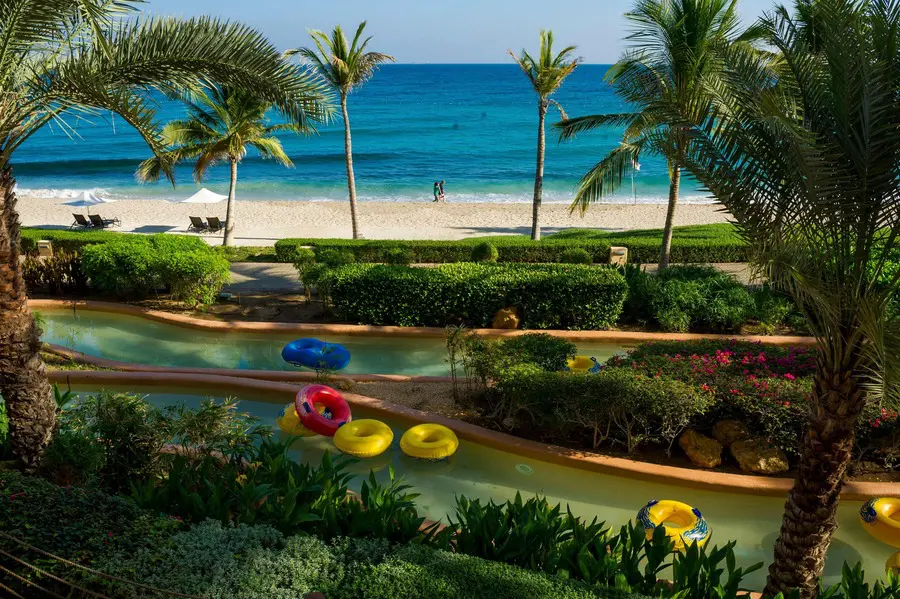
Technical criteria for building a pool slide
Before building water slides, it is necessary to assess whether the existing facility allows for their safe integration. It is not enough to simply add a structure next to the pool: the design must meet hydraulic, structural, functional, and regulatory criteria.
Some key points are:
- Available space: You must account for the slide’s footprint, stairs, platform, waiting area, and exit area.
- Height and slope: These factors determine speed, the experience, and safety requirements.
- Landing depth: must be appropriate for the type of slide and the user profile.
- Materials: must withstand sun exposure, moisture, chemicals, and heavy use.
- Water flow: The slide requires a stable and properly designed water supply.
- Accessibility and evacuation: The routes must allow for orderly use and rapid intervention if necessary.
- Maintenance: The facility must allow for inspections, cleaning, and checks of joints, surfaces, and structural elements.
- Aesthetic integration: In commercial pools, the slide should enhance the surroundings and not appear to be a haphazard addition.
In larger-scale projects, it is also advisable to analyze how these attractions connect with the park’s general circulation, changing rooms, shaded areas, food service areas, entrances, and other water slides or water play areas.
Safety regulations and water management in water parks
Water park regulations are the cornerstone of any commercial project. Water slides must be designed, installed, and operated in accordance with strict technical standards and local laws. To ensure the project’s legal and operational success, the design must focus on three critical areas:
- Attraction Safety: Regulates slide design, gradients, contact surfaces, safe access points, signage, and structural testing methods.
- Receiving pool safety: Defines the dimensions, depths, and operation of the public pool to mitigate risks to both users and staff.
- Water Quality and Treatment: This aspect governs filtration systems, water turnover rates, automated disinfection, and hygiene and sanitation parameters to prevent any risk of contamination.
Installing commercial water slides sets your facility apart and greatly enhances its appeal, but it requires impeccable engineering planning. Relying on specialists like Fluidra ensures that your water park will be transformed into a completely safe, code-compliant, and highly profitable leisure asset.