

 0.89 (+4.5%)
 Go back
 Water theme park design is the integrated process of planning the spatial layout, attractions, water infrastructure, theming, and operational systems of a commercially operated aquatic leisure facility — from the first concept sketch to the day the gates open.
Behind every wave pool and slide tower is a long chain of interconnected decisions — spatial, technical, financial, and experiential — that must be aligned from day one. Whether you’re developing a standalone outdoor park, integrating an aquatic attraction into a resort, or planning a wellness facility, this guide covers the key design phases, attraction types, water systems, and trends that define successful projects today.


 Contact us
 Close form
What is water theme park design and why does it require specialist planning?
Water theme park design is the specialist process of planning, engineering and theming an aquatic attraction that is safe, profitable and compelling enough to bring guests back repeatedly.
It requires specialist planning because a water theme park operates at the intersection of several complex disciplines simultaneously: structural engineering, hydraulic design, guest flow management, attraction safety standards, water treatment science, theming and landscape architecture. A decision made in one area — say, the placement of a wave pool — has downstream consequences for hydraulic recirculation, bather load management, filtration sizing and even F&B placement. Getting these interdependencies right at the master plan stage is far less expensive than correcting them during construction or, worse, after opening. According to IAAPA, the global water park sector hosted over 65 million visitors in 2023 and continues to grow — making sound design decisions more commercially critical than ever.
For developers and operators, the key insight is this: guest experience and operational efficiency are not competing priorities in water theme park design — they’re the same priority, approached from different angles. A park that flows well spatially is also a park that operates more efficiently.
What are the key phases of water theme park design?
Most successful water theme parks follow a structured sequence of design phases. Skipping or compressing any of them tends to create problems that compound over time — a miscalculated feasibility study leads to attraction choices that don’t match the market; a rushed site selection process results in hydraulic layouts that are expensive to maintain. Here is how the process typically unfolds.
What should a feasibility study cover before designing a water theme park?
Before any design work begins, a feasibility study establishes whether the project makes commercial sense and what kind of facility will succeed.
This phase covers market analysis — catchment area, demographic profile, competitive landscape, seasonal demand — and produces a concept brief defining the park’s vision and theme. The theme shapes every subsequent design decision, from material finishes to attraction selection. It also establishes the budget envelope: a full standalone water theme park typically requires $30M–$200M+ in investment; hotel-integrated parks start from $5M–$30M.
How does site selection shape the master plan?
Site criteria go beyond simply finding accessible land. A water theme park needs sufficient area (typically 5–20+ hectares for a standalone facility), suitable topography for hydraulic drainage, proximity to the visitor base, and access to reliable water and utilities.
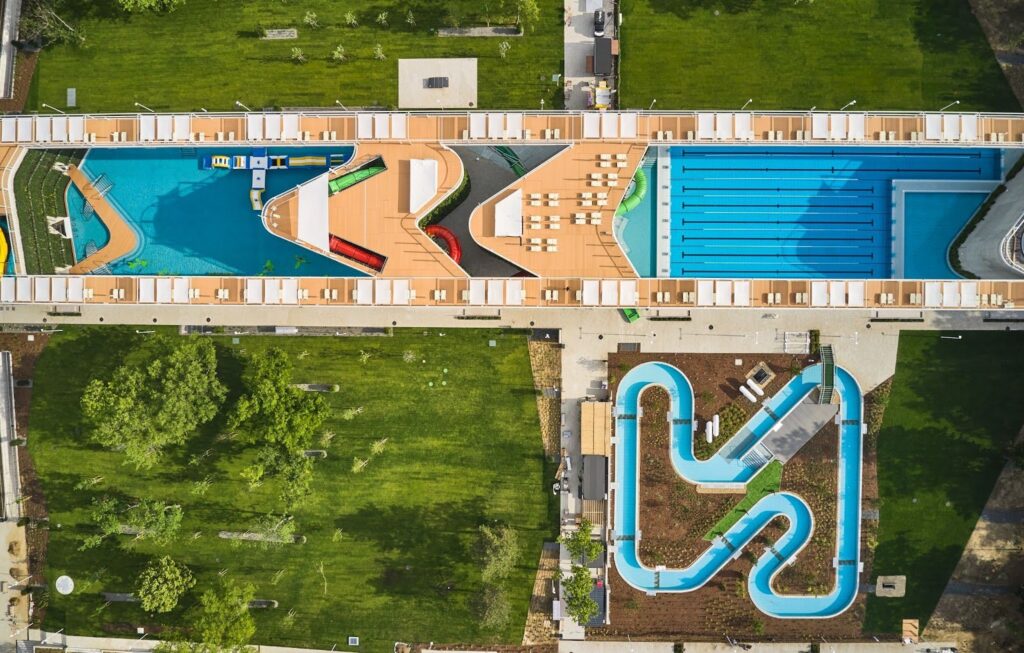
The master plan translates site analysis into a spatial framework: total footprint, entry and exit flows, zone locations, parking, and back-of-house areas for maintenance, plant rooms and staff. A common design error is under-allocating back-of-house space — these areas must be invisible to guests but fully accessible for operations, and retrofitting them is disproportionately expensive.
How does attraction zoning work in water theme park design?
Zoning is one of the most consequential design decisions in the process. It determines how guests move through the park, which attractions they encounter first, where they pause and spend, and how long they stay.
A well-zoned water theme park typically includes: a welcome and entry plaza, a thrill rides zone, a family attractions area, a children’s splash pad, a wave pool or lazy river for high-capacity enjoyment, relaxation areas with shade, VIP cabanas, and F&B zones positioned to intercept natural guest circulation paths.
The design principle is to create a journey: high-energy thrill attractions draw guests toward the back; relaxation zones provide recovery; premium areas offer revenue-generating upgrades.
What water infrastructure must be planned at the design stage? ⚠️ The element most often overlooked
This is the phase that separates good water theme park design from great — and the one most underrepresented in design guides.
Water infrastructure is not an afterthought. It must be designed in parallel with spatial layout from the earliest master plan stage, because the systems that keep the water clean and safe for thousands of daily visitors are physically large, structurally demanding, and expensive to modify once built.
For a commercial water theme park, the key systems to specify include:
- Filtration: commercial multi-stage filtration sized for peak bather loads. A park hosting 5,000–10,000 daily visitors requires filtration capacity well beyond standard commercial pools. Undersized filtration is the most common cause of water quality problems in high-traffic parks.
- Water treatment: UV disinfection, AOP (Advanced Oxidation Process) or low-salinity electrolysis (Neolysis) are increasingly preferred over conventional chlorination. They dramatically reduce chloramines — the main source of guest complaints about eye and skin irritation — while maintaining full compliance with health regulations.
- Recirculation design: the hydraulic layout of returns, inlets and skimmers must eliminate dead zones throughout the water body. Dead zones accelerate biological growth, increase chemical demand and create uneven water quality. A well-calculated water turnover rate is the foundation of effective recirculation design.
- Water conservation: a large outdoor park can lose 20–40% of its annual water volume to evaporation and filtration backwash. Regenerative filtration systems reduce backwash consumption by up to 90%. Water recycling systems for pools add another layer of sustainability — increasingly expected by investors and regulators alike.
- Automation and remote monitoring: real-time control of pH, ORP, chlorine residual and flow rates is essential at commercial scale. Smart monitoring systems flag deviations before they become problems and reduce chemical overconsumption.
Plant rooms must be sized and located at the master plan stage. Retrofitting additional plant capacity into an operating park is one of the most expensive and avoidable problems in the industry.
What types of attractions define a water theme park?
The strongest water theme parks offer a portfolio of experiences that balance adrenaline, family fun, passive enjoyment and social relaxation — ensuring every member of a group has a compelling reason to visit.
Water slides and thrill rides remain the primary draw: speed slides, body slides, tube slides and multi-person raft rides. Hybrid slides combining multiple ride types are standard in top parks, and immersive elements — lighting, sound, themed tunnels — are now expected. Family raft rides in particular have become the most popular attraction category; operators consistently report they become the park’s highest-rated ride.
Wave pools accommodate large volumes of guests simultaneously and create the beach atmosphere that defines many parks’ identity. Lazy rivers offer the highest capacity per square meter of any attraction — guests can spend 30–60 minutes floating, freeing thrill rides for higher-energy visitors.
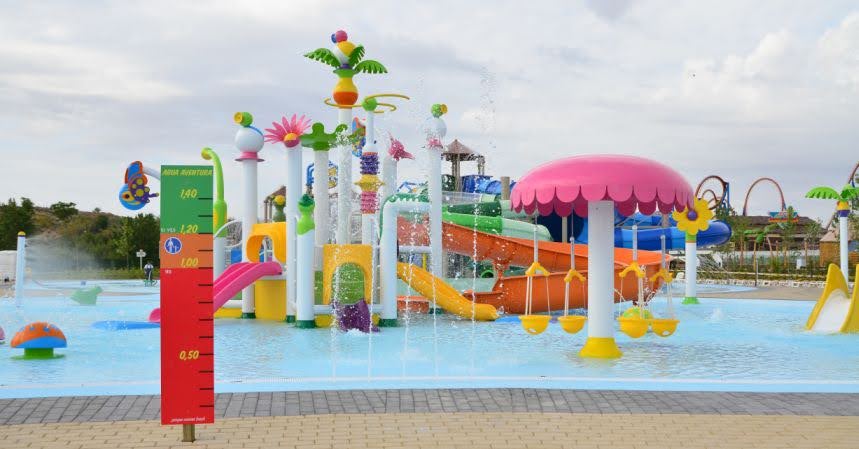
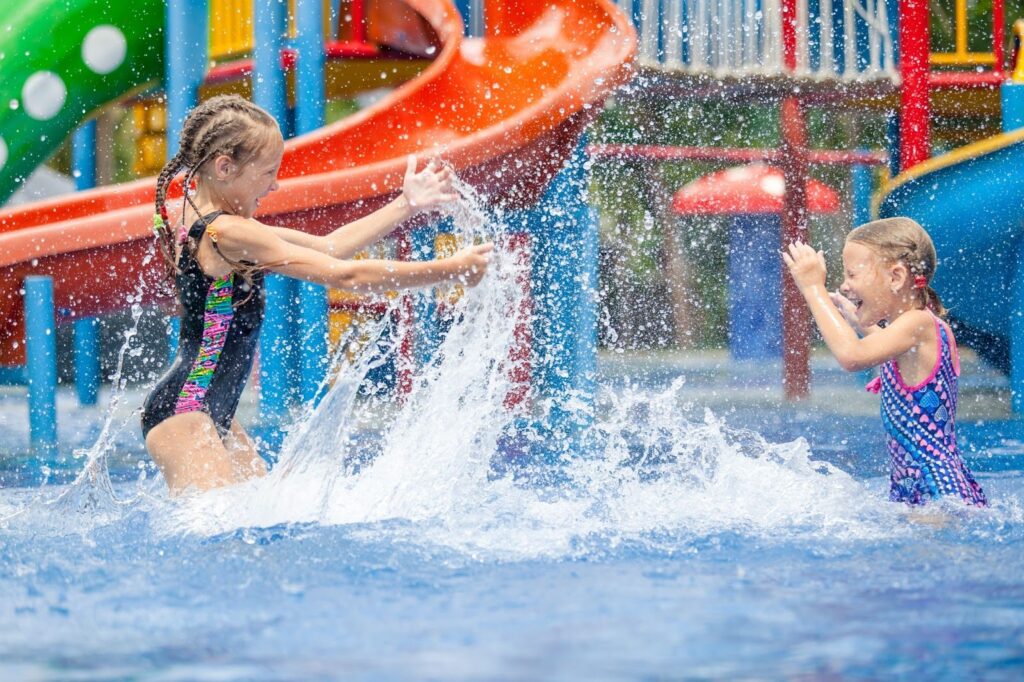
Children’s splash zones are critical for family retention. Parents stay longer when their youngest children have dedicated, age-appropriate experiences — and longer dwell times mean more F&B and retail spend. Splash parks have evolved well beyond simple spray features: today they incorporate slides, wading pools, interactive water play and dedicated shade for parents.
Wellness and relaxation zones are a growing differentiator, particularly in European markets where balneotherapy and hydrotherapy circuits are part of the expected offering at premium aquatic facilities. VIP cabanas generate 3–5x the revenue per guest of standard seating and are increasingly standard in new park designs.
Does the type of water theme park change how it should be designed?
Yes — significantly. The typology of the facility is one of the first decisions that shapes every subsequent design and engineering choice.
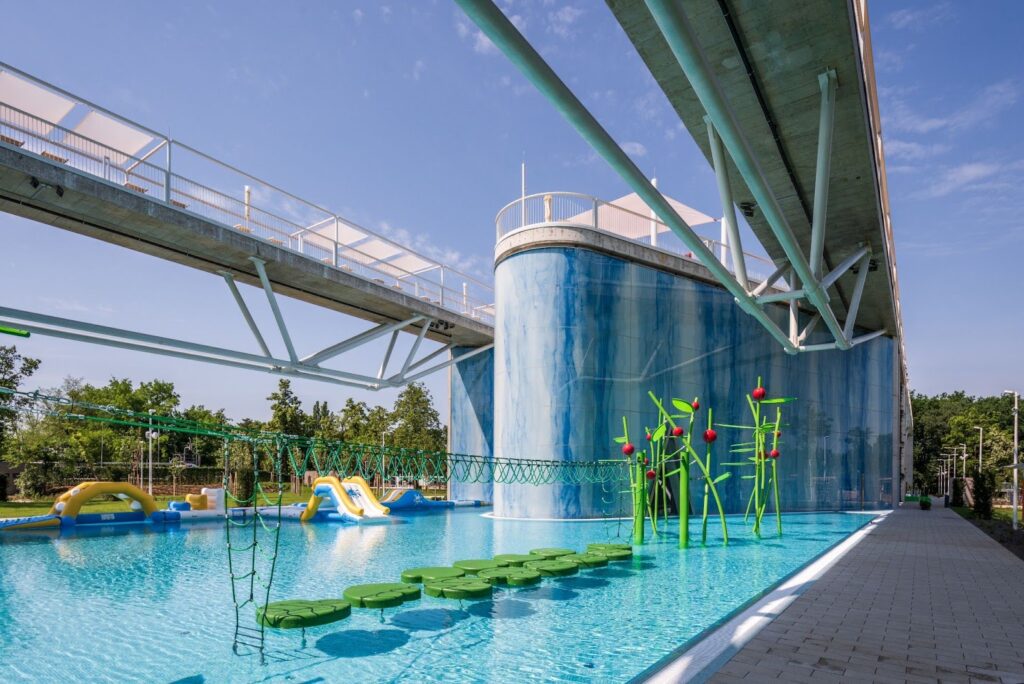
Outdoor standalone water parks are typically seasonal. Design must maximize peak-season capacity while managing heat and UV exposure. Water conservation is critical as evaporation losses are highest in open, high-temperature environments.
Indoor water parks operate year-round, offering a different revenue model. The design challenge shifts to HVAC, dehumidification and air quality management — indoor aquatic facilities require robust humidity-control systems and corrosion-resistant materials. Higher investment, but predictable year-round revenue often justifies it for hotel operators.
Resort-integrated water parks must serve all guest ages while maintaining the property’s premium aesthetic. Per-guest spend potential is higher than standalone parks. Design integrates with hotel architecture — the type of hotel determines the right aquatic strategy, from rooftop features and plunge pools for boutique properties to full lazy rivers and slide towers for large resort complexes.
Wellness and spa water parks are the fastest-growing typology in Europe. They prioritize therapeutic water experiences — thermal circuits, contrast pools, hydrotherapy, salt rooms — over thrill attractions. Water quality standards are more stringent because guests have longer skin and respiratory exposure, and the commercial positioning depends entirely on the quality of the water experience.
What are the latest trends shaping water theme park design?
The most competitive water theme parks in 2025 are built around three converging pillars: deeper experience, smarter technology and genuine sustainability.
On the experience side, immersive theming has moved from luxury to baseline expectation. Slides are embedded in narrative environments with lighting, audio and landscape design. VIP amenities — private cabanas with pools and premium F&B — are standard in new parks and increasingly retrofitted into existing ones as a revenue diversification strategy.
On the technology side, connected pool technology enables real-time water quality management at commercial scale, automating chemical dosing, filtration adjustment and flow rate optimization. AI-powered drowning detection systems extend lifeguard capability in high-traffic facilities. Digital twin technology allows water and energy consumption to be optimized before construction begins. Robotic pool cleaning is increasingly adopted for consistent hygiene with reduced labor dependency.
On the sustainability side, water conservation has become an operational imperative. Parks implementing regenerative filtration, smart covers and rainwater harvesting can reduce water consumption by 30–50% annually — a significant cost reduction and a growing credential for facilities pursuing green certification.
How do design decisions in a water theme park affect long-term profitability?
Every design decision in a water theme park has an operational cost implication. Made correctly at the design stage, these choices reduce OpEx for the entire life of the facility — typically 20–30 years or more.
The hydraulic layout is one of the clearest examples. A recirculation system with well-placed returns and skimmers eliminates dead zones and reduces chemical dosing requirements. A poorly designed system can increase annual chemical costs by 20–30% — permanently.
Water treatment selection has a direct impact on guest satisfaction. Parks adopting UV or AOP systems report fewer complaints about eye and skin irritation. Fewer complaints mean better reviews and higher repeat visit rates — a compounding commercial advantage.
The attraction mix is also a profitability decision. Lazy rivers and wave pools serve the highest number of guests per hour at the lowest operational cost. VIP cabanas generate 3–5x the revenue per guest. Getting this balance right is one of the highest-value contributions a design team can make.
Finally, plant room sizing has an outsized long-term impact. An undersized plant room expanded mid-operation can cost several times what adequate sizing would have cost at design stage.
At Fluidra, we work with developers, architects and operators across the full spectrum of water theme park design — from technical infrastructure specification to modern pool filtration systems and commercial pool construction — bringing the aquatic engineering expertise that most design guides leave out.
Frequently asked questions
What are the key elements of water theme park design?
The key elements include a comprehensive master plan, attraction zoning (thrill rides, family areas, children’s zones, relaxation areas), technical water infrastructure (filtration, treatment, recirculation), theming and landscaping, safety systems, and F&B facilities. Each element must be designed as an integrated system — decisions in one area directly affect performance in all others.
How much does it cost to build a water theme park?
Costs vary by scale and typology. A full standalone water theme park typically requires $30M–$200M+ in construction investment. Hotel-integrated water parks start from $5M–$30M. Annual return on investment for well-designed, well-operated parks typically ranges from 10–20%.
What is a water park master plan?
A water park master plan is the foundational design document that defines the park’s layout, attraction zones, water infrastructure, back-of-house areas and phasing strategy. It guides every subsequent design and engineering decision — and getting the hydraulic layout and plant room sizing right at this stage is the most impactful thing a design team can do for the facility’s long-term performance.
What is the difference between indoor and outdoor water theme park design?
Outdoor parks are seasonal in most climates, requiring shade management and robust water conservation strategies. Indoor water parks operate year-round but require specialized HVAC, dehumidification and humidity-resistant materials. Indoor parks offer more predictable year-round revenue; outdoor parks achieve higher peak-season volumes at lower infrastructure cost.
How does water filtration work in a water theme park?
Water theme parks use commercial multi-stage filtration systems sized for thousands of daily visitors. Treatment technologies including UV disinfection, AOP and low-salinity electrolysis reduce chloramine formation — the primary source of guest discomfort. Per WHO guidelines for recreational water, maintaining stable pH and disinfectant residuals is essential in high-bather-load environments. Automated monitoring systems control these parameters in real time, ensuring consistent water quality at commercial scale.
* All cost estimates provided in this article are indicative and may vary depending on the project and installation in question.